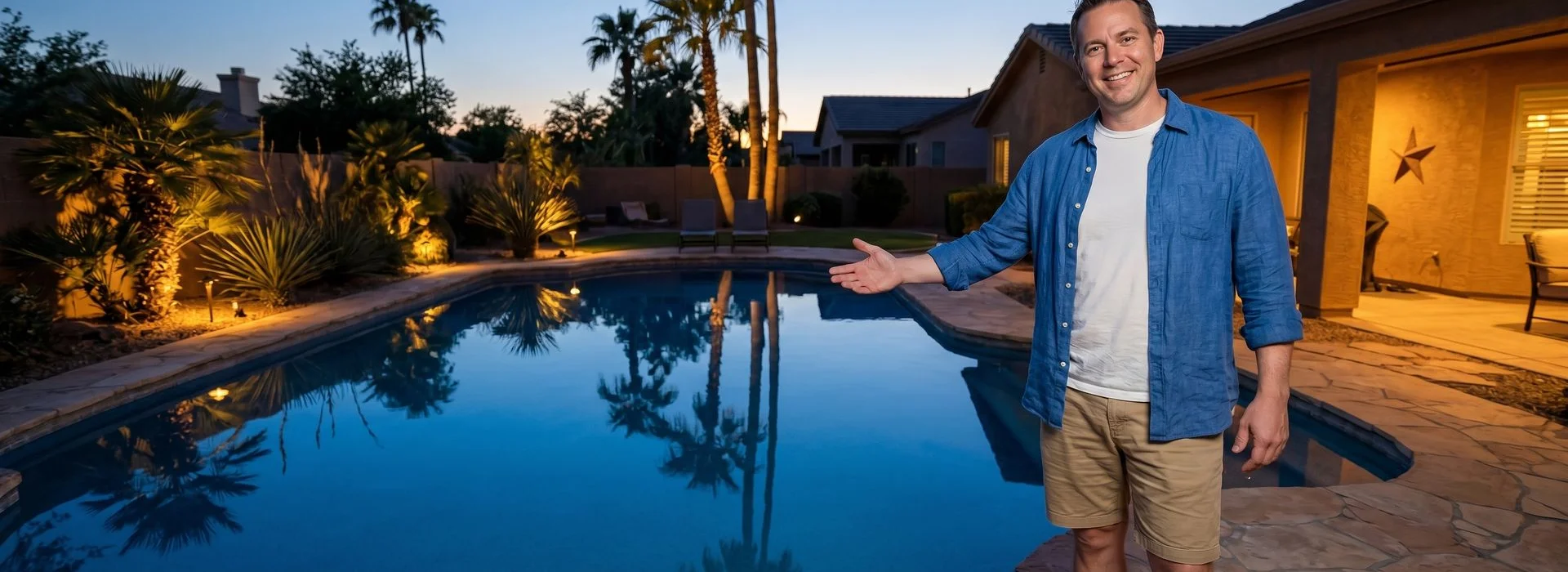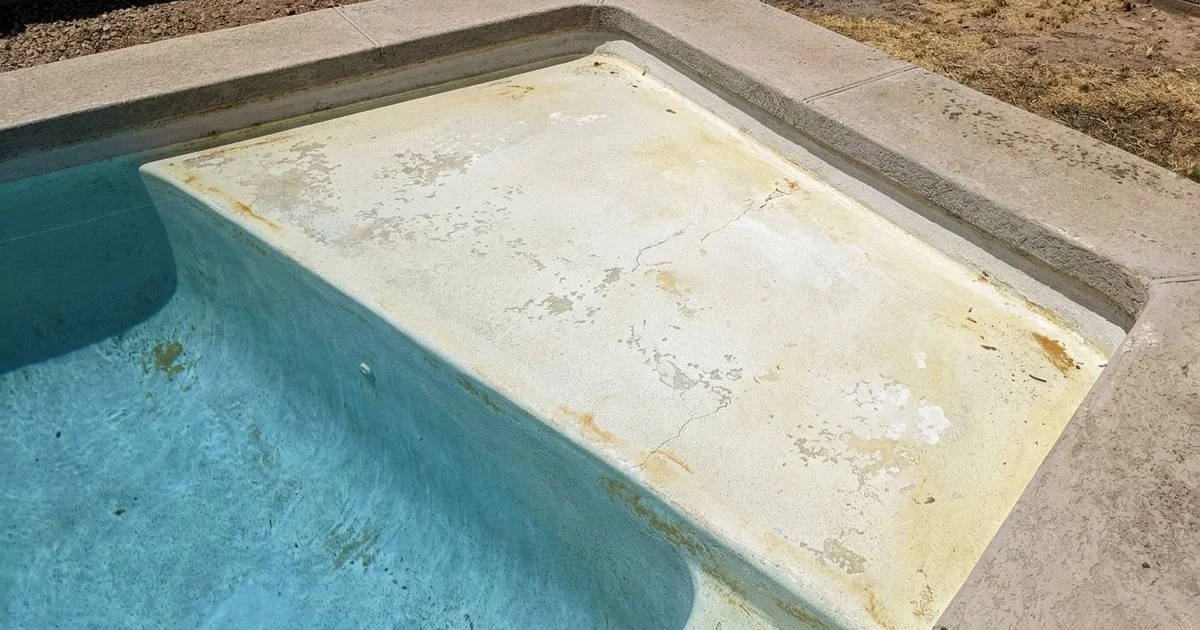
You know how quickly the desert climate wears down exterior paint and patio furniture. The water in your backyard takes exactly the same beating. Our team at David Resurface talks to local homeowners daily who are surprised by how fast their underwater surfaces degrade.
Many people wonder exactly how often replaster pool projects should be scheduled. The truth is that Maricopa County presents a unique challenge for aquatic materials.
If you are unsure whether your pool has crossed into replacement territory, our visible signs your pool needs resurfacing guide walks through a simple self-check.
Let’s look at the hard data behind local surface lifespans and explore exactly what to watch out for.
The Phoenix Replaster Cycle
Traditional white plaster in Phoenix pools runs on a 7 to 12 year cycle. When asking how often replaster pool maintenance is truly necessary here, that lifespan is significantly shorter than the 10 to 15 years quoted nationally.
We see the effects of this harsh climate on a daily basis. Phoenix experiences an extreme 166 days above 90 degrees Fahrenheit each year.
This intense UV radiation breaks down the binder in white plaster much faster than in cooler climates. Plus, municipal tap water in our area starts with 200 to 400 parts per million (ppm) of dissolved minerals.
Evaporation causes this calcium hardness to spike rapidly. The unique combination of these local factors forces a faster replacement schedule:
- Extreme Heat Load: Maricopa County averages 166 days above 90 degrees, accelerating material breakdown.
- Evaporation Rates: Constant water loss leaves heavy mineral deposits behind.
- Starting Water Quality: Local tap water delivers high base levels of calcium and magnesium right out of the hose.
What Shortens the Cycle
Chemistry neglect, unmanaged hard water, and daily physical wear will drastically cut your plaster life short. We regularly see pools that need resurfacing at year seven entirely due to poor chemical management. Let’s break down the specific factors that destroy pool surfaces.
Chemistry Neglect
Low calcium hardness leaches the cement matrix directly from the walls. Aggressive chlorine swings etch the surface deeply. Unstable pH is absolutely brutal on standard plaster.
Our technicians closely monitor the Langelier Saturation Index (LSI) because a reading below -0.3 causes permanent, irreversible corrosion. Cyanuric acid (CYA) buildup from standard chlorine tablets also creates a toxic environment that locks up your sanitizer and weakens the finish over time.
Hard-Water Scaling
Without a periodic acid wash, scale bonds chemically to the surface and accelerates failure. Local pools easily climb to 600 or 800 ppm of calcium hardness within just a few years due to evaporation.
We find that this excessive hardness creates thick, sharp deposits along your tile line and across the floor. These deposits ruin the aesthetic and damage the integrity of the shell.
Intense UV and Bather Load
Heavy bather load stresses the entire system. A pool used daily by multiple swimmers requires much more chemical intervention than one used weekly.
Open-yard pools with no tree or structure shade get the full desert UV load. Data shows that this constant sun exposure bakes the shallow sections and degrades the plaster binder prematurely. Adding a shade sail or umbrella can provide significant protection.
What Extends It
Maintaining a stable LSI and scheduling strategic professional cleanings are the most effective ways to maximize your surface lifespan. We recommend a proactive approach to keep the material strong.
Cycle-stretchers that work
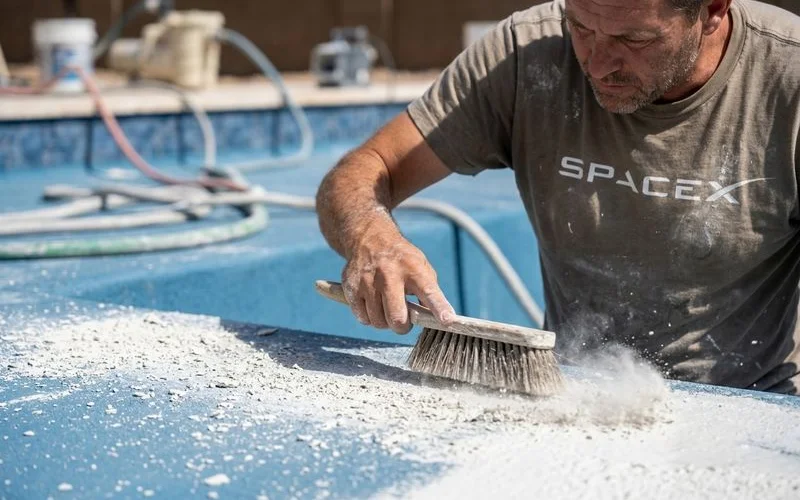
Stable Langelier Saturation Index (0.0 to +0.3). Weekly brushing of floor and walls. Annual professional water balance check. Strategic acid-wash at year 4 or 5. These habits can stretch plaster to the 12-year high end.
The Langelier Saturation Index is the gold standard for commercial aquatic facilities, and it works just as well in your backyard. Keeping the LSI between 0.0 and +0.3 prevents both corrosive etching and destructive scaling.
Our maintenance routines prioritize these exact metrics to stretch your plaster to that 12-year high end.
| Maintenance Action | Standard Impact | Professional Impact |
|---|---|---|
| Water Testing | Weekly pH and chlorine checks | Frequent LSI calculations to stop etching |
| Brushing | Occasional spot cleaning | Weekly floor and wall sweeps to prevent bonding |
| Acid Washing | Only when deep stains appear | Strategically scheduled at year 4 or 5 |
Time-to-Call Signs
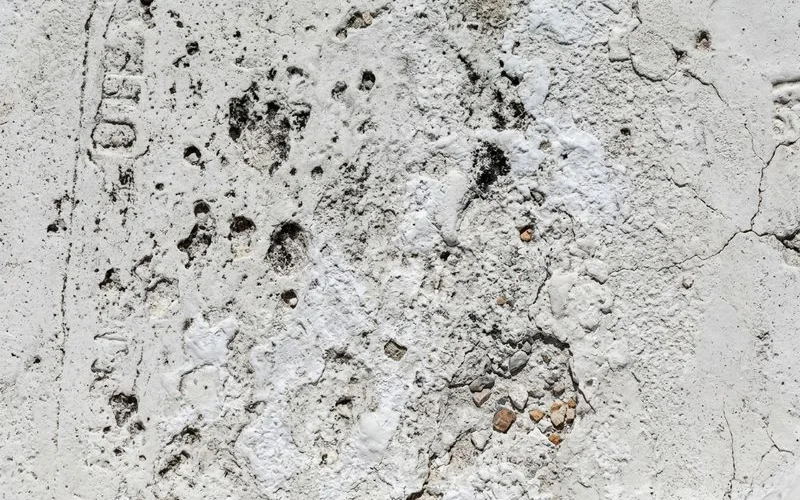
Rough patches, distinct hollow sounds, and stubborn discoloration indicate exactly when to replaster pool surfaces. The specific signs that dictate a necessary change are clear if you know what to look for.
- The Screwdriver Test: Take a plastic hammer or the butt of a screwdriver underwater and lightly tap the floor. A distinct, hollow sound means the plaster has delaminated and separated from the underlying concrete.
- Volcano Nodules: Look for small, hardened mounds that resemble tiny volcanoes. These calcium nodules mean water has penetrated voids beneath the finish.
- Stubborn Discoloration: Copper staining often appears mint green or dark brown, leading many owners to mistake it for black algae. If you shock the pool and the stain turns solid black, you have a metal issue.
- Snagging Textures: Rough patches that snag fingernails or catch feet are a huge red flag.
- Chemical Instability: Chlorine that will not hold even at correct levels points to a failing matrix.
We always suggest getting a professional eye on the situation. The experts at David Resurface offer a comprehensive Phoenix pool plaster resurfacing service that walks through whether to replaster, upgrade to an aggregate, or address specific structural cracks first.
Our team provides free assessments for any pool sitting at 10 or more years with two or more of these symptoms. Catching these problems early saves you from much more expensive structural repairs.
Plaster vs Aggregate Next Cycle
Upgrading to an aggregate finish provides double the lifespan of traditional plaster for a very reasonable price increase. If this is your second or third resurfacing project, stepping up to a premium material is the smartest financial move.
We highly recommend exploring Quartz or Pebble options. Products like Diamond Brite and Pebble Tec last significantly longer because they stand up to the desert UV load and resist chemical etching much better than plain white cement.
Aggregate finishes easily last 15 to 20 years. Our cost comparisons heavily favor the upgrade once you run the math over a two-decade span.
| Surface Material | Average Lifespan | UV & Chemical Resistance |
|---|---|---|
| Traditional White Plaster | 7 to 12 Years | Low |
| Quartz (e.g., Diamond Brite) | 15 to 20 Years | High |
| Pebble (e.g., Pebble Tec) | 15 to 20+ Years | Maximum |
This simple breakdown shows why so many local homeowners make the switch. You get a much smoother, tougher finish that completely transforms the look of the water.
Conclusion
Knowing how often replaster pool projects should happen saves you from unexpected structural damage.
We want your backyard investment to stay beautiful and safe for decades. Your backyard oasis deserves a strong foundation.
Keep an eye on your water chemistry, watch for those specific warning signs, and call a professional if you spot delamination.
Our customer service team is ready to help you plan your next steps. Schedule your free surface assessment today to find out exactly what your pool needs.