Our team at David Resurface frequently speaks with Phoenix homeowners trying to choose between a plaster vs aggregate pool finish. You know exactly what that deterioration looks like after a decade in the desert sun, and making the right upgrade choice is a big decision.
The intense UV exposure and mineral-heavy water here simply destroy inferior materials. We see standard surfaces break down in as little as five years without perfect chemistry.
Many property owners assume a quick cosmetic patch is the smartest financial move.
Let’s look at the actual 2026 pricing data, what it tells us about these materials, and explore a few practical ways to respond.
The Real Trade-Off
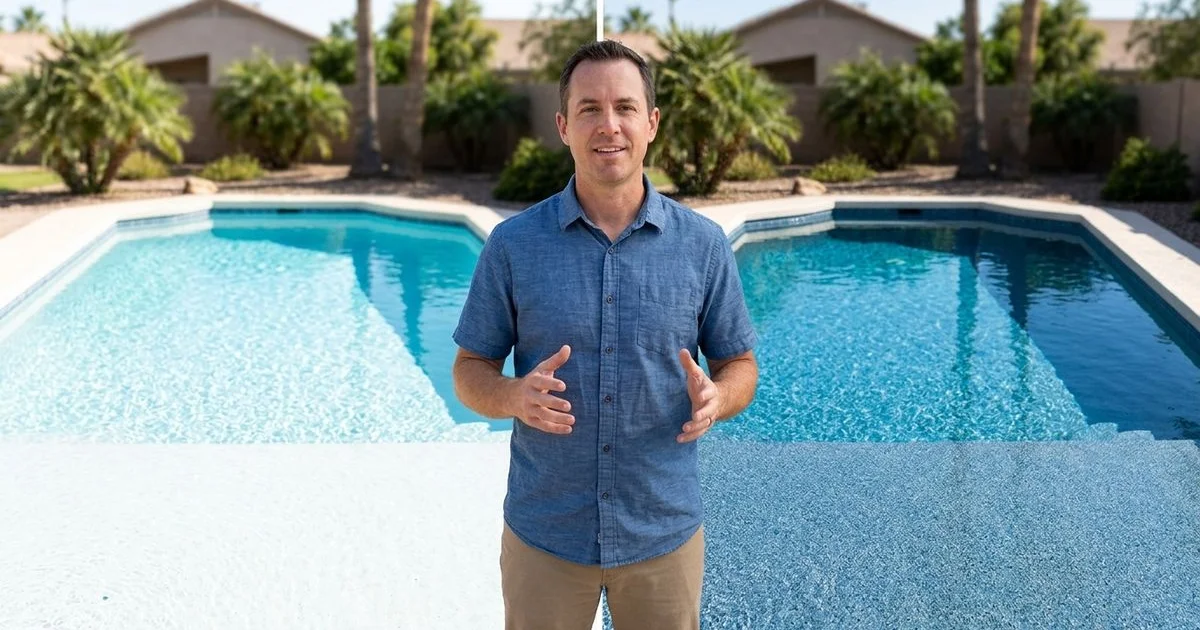
In any plaster vs aggregate pool finish comparison, you will notice they both refresh a swimming area, but they perform very differently under harsh conditions. The core difference centers on upfront costs, expected lifespan, and foot feel.
We constantly remind clients that the right choice depends heavily on how long you plan to own the home. The extreme summer heat regularly pushes backyard water temperatures past 90 degrees. This heat stresses standard materials and accelerates the chemical reactions that cause rapid wear.
| Factor | Standard White Plaster | Diamond Brite (Quartz) | Pebble Tec (Aggregate) |
|---|---|---|---|
| Upfront cost (500 sq ft) | $3,600 to $5,400 | $5,400 to $8,100 | $7,200 to $10,800 |
| Phoenix lifespan | 5 to 10 years | 10 to 15 years | 15 to 25 years |
| Hard water resistance | Low (Shows scaling) | Moderate | Excellent (Hides calcium) |
| Foot feel | Very smooth | Slightly textured | Highly textured |
Arizona’s hard water often exceeds 400 parts per million of calcium. A stark white background will show every ounce of that calcium scaling within a few seasons.
Premium aggregate options actively hide this inevitable buildup.
When Plaster is the Right Call
Standard white cement remains a valid option for many specific situations. A fresh coat of standard white cement and marble dust runs about $4 to $6 per square foot in 2026.
This makes it highly attractive for immediate, short-term needs. We suggest sticking with standard finishes if your timeline falls into one of these categories:
- Pre-sale resurfacing to freshen a property before listing it on the market. You will not hold the home long enough to realize the value of a premium upgrade.
- Rental properties where frequent turnover and strict maintenance budgets matter more than a 20-year aesthetic.
- Short-hold homeowners planning to move in five years or less. The upfront savings compound beautifully in your total renovation budget.
- Tight budget refreshes where a basic coating is the only realistic way to get a clean, functional swimming area this year.
Homeowners flipping a property rarely see a full return on a $12,000 premium job. Buyers simply love seeing a clean, blue pool regardless of the specific material used.
When Aggregate Wins
Aggregate materials mix natural stones or quartz crystals directly into the cement base. This creates a highly durable surface that easily withstands 300 days of annual sunshine.
We always evaluate the specific water conditions during our initial site visits. High alkalinity levels will etch basic cement surfaces rapidly. A quartz option provides a protective barrier against this chemical imbalance.
- 10+ year home hold. You will easily absorb the premium pricing over time while enjoying superior stain resistance.
- Multi-replaster pools. If you have already plastered twice, the structural integrity demands a stronger aggregate upgrade for the next cycle.
- Hard-water-stain-prone areas. A blend of natural stones masks calcium onset far better than a bright white background.
- Premium coping and tile combinations. A textured finish like Pebble Sheen coordinates perfectly with high-end decking materials.
The upgrade path that works
Many Phoenix homeowners replaster once, realize they will stay 15+ years, and upgrade to Pebble Tec or Diamond Brite on the next cycle. It is a legitimate strategy. Standard coatings provide a reasonable short-term refresh even if natural stone is your long-term plan.
For families with young children, we frequently install Pebble Sheen. It uses a much finer stone blend than standard Pebble Tec, which makes it far gentler on bare feet.
The Cost-Per-Year Math
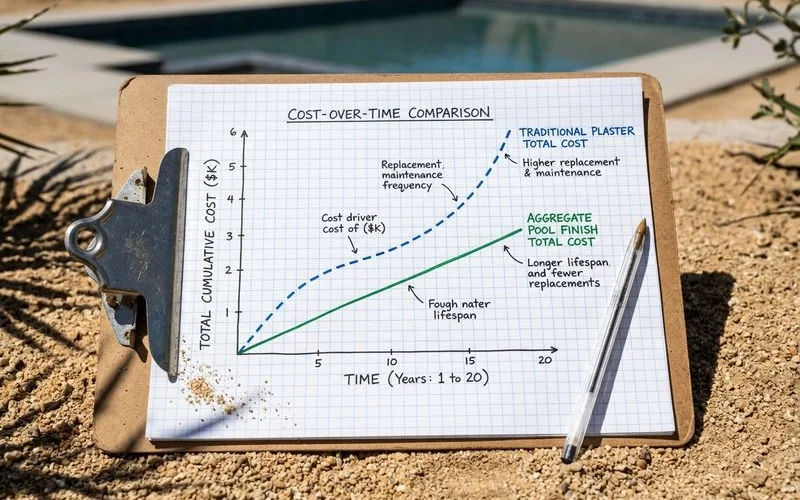
Comparing the raw sticker price of different materials only tells half the story. The true financial picture emerges when you calculate the cost per year of expected ownership.
We pull these figures directly from 2026 pricing data for a typical 500-square-foot Phoenix backyard installation. These calculations assume standard maintenance and normal desert weathering.
- Standard White Plaster: $4,500 upfront divided by a 7-year average lifespan equals $642 per year.
- Diamond Brite: $6,500 upfront divided by a 12-year average lifespan equals $541 per year.
- Pebble Tec: $9,000 upfront divided by an 18-year average lifespan equals $500 per year.
This pool finish comparison clearly shows that premium stone wins the long-term financial race.
This mathematical advantage only holds up if you actually keep the property for two decades. The lower upfront cost of a basic coating is absolutely the better call if you are relocating soon.
If you need granular pricing details, our Pebble Tec cost in Arizona guide breaks down the exact numbers. We want you to feel completely confident in your final choice. You can explore our Phoenix pool plaster service or the specific Pebble Tec resurfacing service pages to walk through both paths with a free on-site estimate.
Conclusion
Understanding the true cost of a plaster vs aggregate pool finish is the most impactful decision you will make for your backyard renovation. You now have the exact numbers and lifespans needed to make a smart, confident investment.
We highly recommend looking at physical samples before signing any contracts. Seeing the texture and color variations in person completely changes your perspective.
Contact our team today to schedule a free backyard consultation. Let us help you build the perfect swimming experience.