We founded David Resurface with a simple mission: to provide exceptional pool remodeling and resurfacing services that local homeowners can truly rely on. Spotting the early signs a pool needs resurfacing prevents expensive structural damage.
Phoenix pool surfaces fail in predictable ways due to extreme heat, high evaporation, and notoriously hard municipal water.
Our team suggests performing a quick walk-around of your backyard oasis to check for specific warning signs. Before you call for a free on-site resurfacing assessment, evaluate your current finish using the guide below.
This proactive evaluation helps you make informed decisions about your property.
The 6-Point Self-Check: Signs Pool Needs Resurfacing
We designed this checklist to help you identify the exact stage of your pool’s surface wear. The harsh Arizona environment accelerates degradation rapidly. A small rough patch today quickly becomes a major source of water loss tomorrow.
| Warning Sign | Typical Cause | Recommended Action |
|---|---|---|
| Sandpaper Texture | Calcium etching | Monitor chemistry, plan resurfacing |
| Stubborn Stains | Metal or organic buildup | Acid wash or replace finish |
| Hollow Spots | Plaster delamination | Immediate assessment needed |
| Water Loss Cracks | Structural shifting | Professional repair required |
1. Rough patches and surface etching
Our technicians frequently see pools where the protective calcium layer has completely eroded away. Phoenix municipal tap water typically starts at 200 to 400 parts per million of calcium hardness. Heavy summer evaporation concentrates those minerals, often pushing local pools beyond 600 ppm within two years.
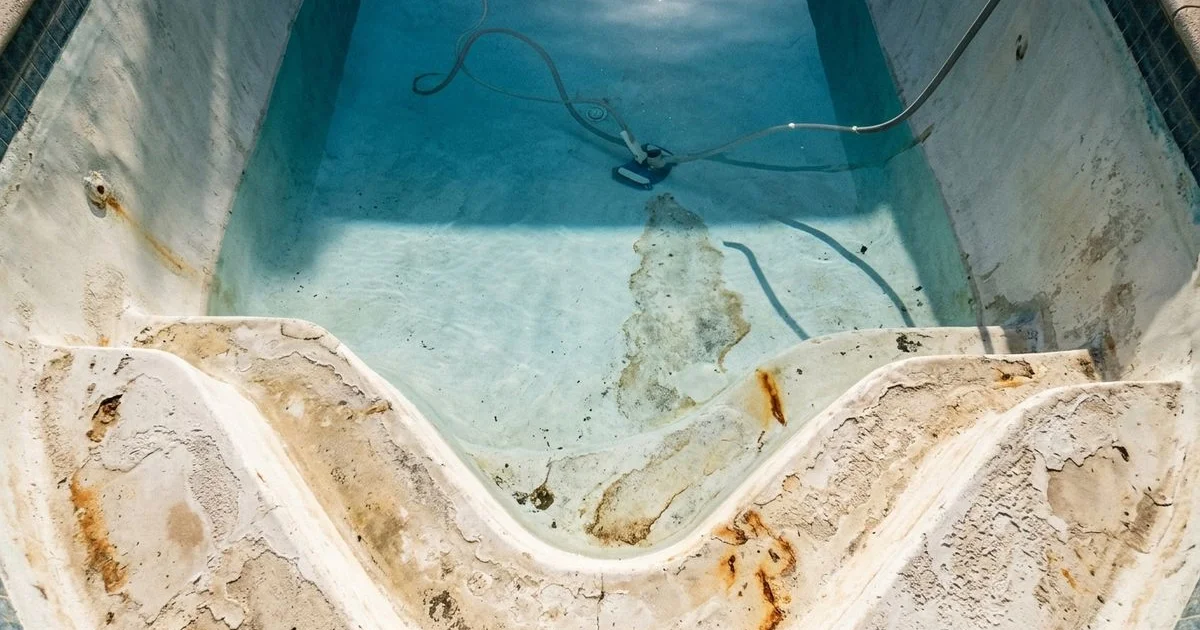
We know this aggressive water strips away the smooth topcoat, leaving behind standard marcite plaster that feels like rough sandpaper. Aggregate finishes develop similar roughness when the cement matrix between the protective stones erodes. This exposed grit easily causes foot abrasions and snagged swimsuits.
2. Staining, mineral blooms, and color bleeding
Our crew looks closely at persistent discoloration because it tells a clear story about your water chemistry. Dark streaks at jet outlets indicate metal staining from old copper plumbing, while rust-colored halos point to iron oxidation. White mineral blooms signify advanced calcium carbonate scale.
We find that if a professional acid wash cannot remove these marks, the surface itself has absorbed the stain permanently. A 2025 regional water quality analysis noted that heavily stained pools in Maricopa County usually require a complete surface replacement to restore a pristine look. Permanent stains indicate severe porosity issues within the material.
3. Plaster delamination and hollow-sounding spots
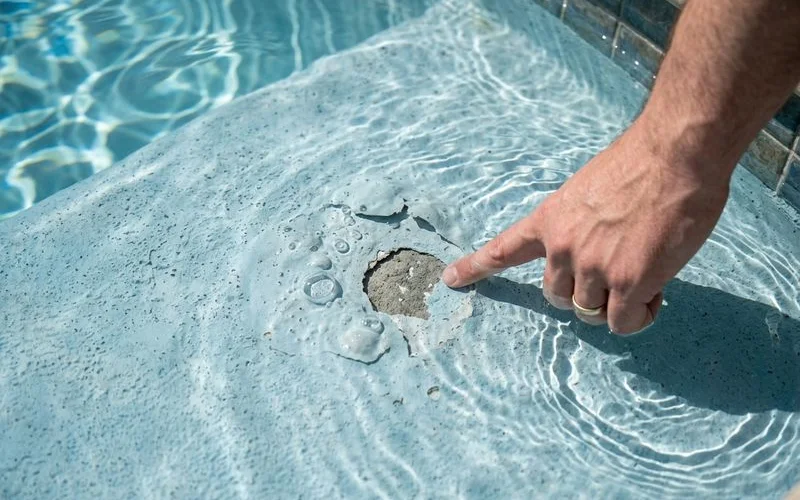
We check for plaster delamination because it indicates a total bond failure between the finish and the underlying gunite shell. You can easily test for this issue using the golf ball test or by tapping the pool floor with a standard telescoping pole. Solid plaster makes a crisp click, while delaminating areas produce a dull, hollow thud.
Our repair specialists warn that once delamination starts, water works into the void and accelerates the failure rapidly. The resulting hydrostatic pressure causes the plaster to pop off in large chunks. This creates jagged edges on the pool floor that are unsafe for swimmers.
4. Cracks, cosmetic vs structural
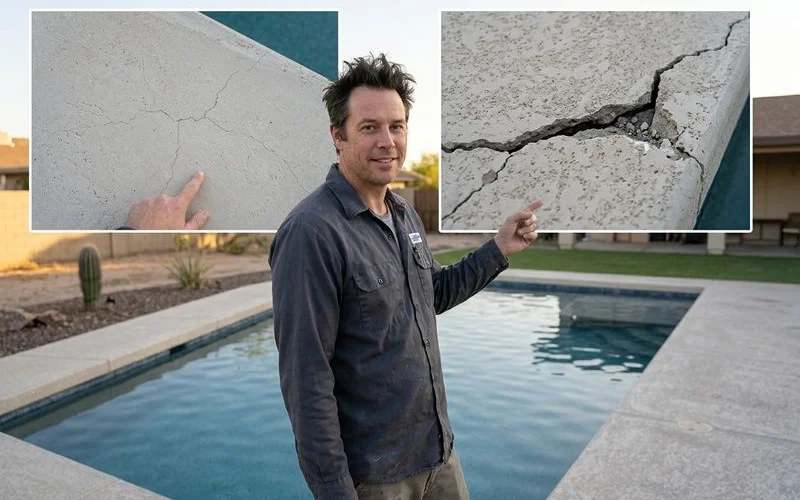
We classify cracks into two distinct categories based on their width, location, and potential for water loss. Most surface-level crazing is harmless, but deeper fissures threaten the structural integrity of your vessel. Arizona’s expansive clay soil often shifts during monsoon season, putting immense pressure on older concrete shells.
Not all cracks are equal
Hairline cracks under 1/16” wide that don’t leak are cosmetic. Wider cracks, crossing joints, or cracks with visible water migration are structural and need attention.
Our field assessments show that structural cracks require completely different repair methods than simple plaster patches. See our calcium scaling and hard-water damage guide if the cracks show up alongside heavy mineral deposits. Catching these fissures early prevents massive leaks.
5. Age benchmarks
Our team tracks the lifespan of every surface material in this harsh desert climate. Constant exposure to triple-digit heat and intense UV radiation cuts the longevity of budget materials significantly. Data from recent industry longevity studies shows exactly when you should start budgeting for a replacement.
- White plaster: 7 to 10 years is the typical Phoenix replaster cycle before etching becomes severe.
- Quartz Aggregate (Diamond Brite): 10 to 15 years, offering better resistance to hard water.
- Premium Aggregate (Pebble Tec / Pebble Sheen): 15 to 20 years or more with proper chemistry maintenance.
We recommend resurface planning if your pool is past the high end of its finish’s range. Proactive scheduling makes sense even if the visible signs are mild. You avoid emergency shutdowns during the peak summer swimming season.
6. Rising chlorine demand
We often discover failing finishes by looking at a homeowner’s skyrocketing chemical costs. Failing pool surfaces consume significantly more chemical sanitizer to maintain safe swimming conditions. The CDC recommends keeping free chlorine between 1.0 and 3.0 ppm, but a pitted plaster wall makes this nearly impossible.
Our service logs indicate that pools with degraded plaster often require double the amount of liquid chlorine during peak summer months. A rough texture features thousands of microscopic crevices that harbor algae and protect bacteria from your daily pool brush. If your chlorine bill has climbed steadily and water chemistry will not hold, the aging finish is the likely reason.
What To Do Next
We recommend taking immediate action if you notice multiple signs a pool needs resurfacing. Delaying a necessary renovation often leads to severe structural decay and much higher repair costs.
The next step is scheduling an accurate, professional evaluation of your aquatic setup.
Our estimators measure the exact square footage, test the entire shell for delamination, and evaluate calcium-scaling prep needs. This assessment helps determine whether a traditional replaster or a premium aggregate upgrade makes better long-term financial sense for your specific backyard.
Reach out today to secure your spot on the renovation schedule.