The Honest Heat Answer
We hear the same concern from almost every homeowner with an aging pool deck.
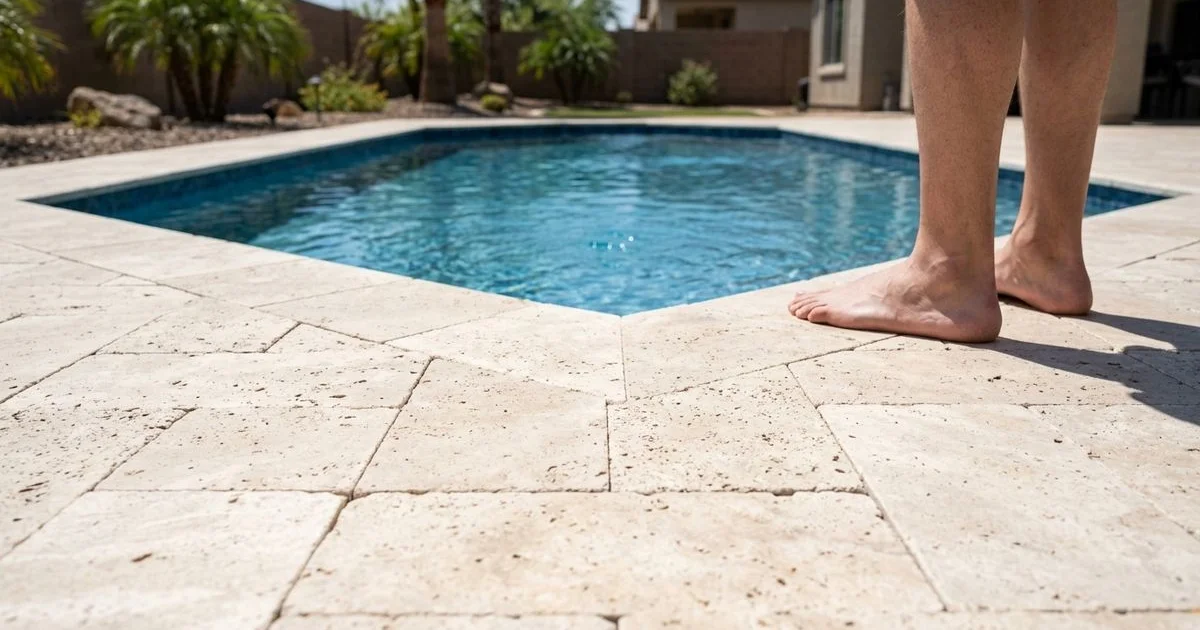
They want the luxury look of natural stone, but they worry about hot travertine pavers during a scorching July afternoon. Concrete and older acrylic overlays have a notorious reputation for trapping solar radiation. To mitigate travertine pavers heat Phoenix installers rely on the natural cooling properties of the stone itself.
Our pool remodeling team knows the local climate well, and we constantly monitor how different materials perform. Banner Health doctors in the Valley frequently treat contact burns from concrete that reaches 140 to 160 degrees in direct sunlight.
Travertine is naturally cooler than plain concrete by 5 to 10°F at peak mid-day temperatures. This drop in temperature provides meaningful foot comfort, though it is not the dramatic difference of a properly color-sealed Cool Deck (which is 15 to 25°F cooler than concrete).
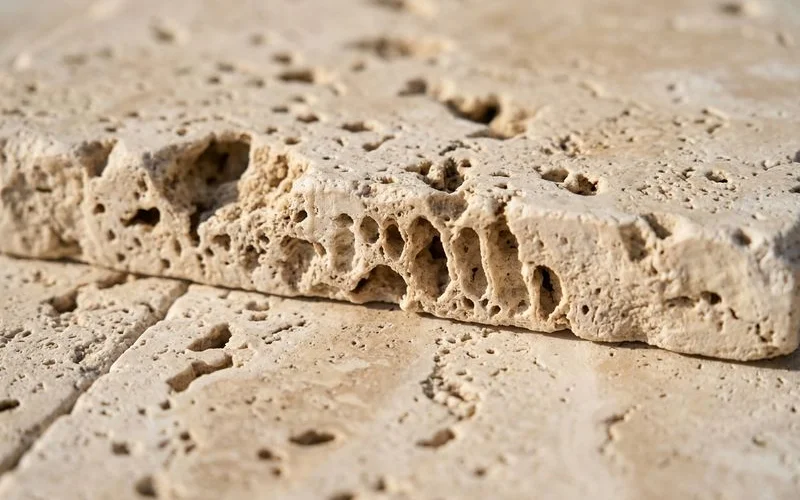
The reason comes down to the physical structure of the material itself. Travertine is a porous natural stone with a high thermal mass that dissipates heat rather than trapping it.
Concrete and acrylic overlays absorb intense heat and hold onto it well into the evening. Travertine breathes, releasing that energy back into the air.
Color Matters More Than You Think
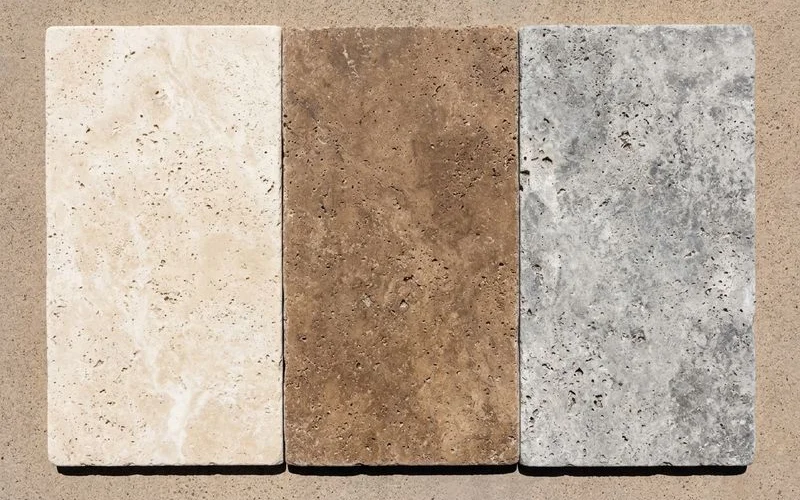
Our designers constantly remind clients that the shade of your stone dictates its thermal performance. Light Reflectance Value measures how much solar energy a surface bounces back into the atmosphere to minimize travertine heat.
Darker materials absorb that radiation and convert it directly into foot-scorching heat. Not all travertine is equally cool in an Arizona backyard.
- Ivory / Classic Cream: The coolest option available. These shades reflect harsh sunlight and stay about 5°F cooler than concrete at peak temperatures.
- Silver / Platinum: Similar to ivory in performance. This cool grey stone runs slightly warmer due to natural color veining.
- Gold / Tuscany Gold: Sits between silver and noce on the heat scale. This warm honey tone absorbs a moderate amount of afternoon sun.
- Noce / Walnut: The warmest of the group. These rich brown tones run very close to bare concrete temperatures.
We strongly suggest that ivory or cream is the right call for Phoenix decks facing west or south. Darker colors work perfectly fine for shaded patios or covered outdoor living spaces.
Sealer Impact
Penetrating vs film-forming sealers
Penetrating sealers (breathable, stain-resistant) have minimal heat impact and are the standard recommendation for Phoenix travertine. Film-forming sealers (glossy, “wet look”) trap more heat and can add 5 to 10°F to surface temperature. Skip the gloss look on full-sun pool decks.
Our sealing process makes a massive difference in how your stone handles the summer sun. A common mistake is choosing a glossy finish just for the visual appeal without considering the thermal consequences.
Penetrating sealers soak deep into the microscopic pores of the stone to repel water and salt. Film-forming sealers sit on top of the stone and create a plastic-like barrier.
That barrier traps rising earth temperatures and prevents the stone from breathing. Surface temperatures can spike dramatically when you apply a wet-look gloss to a full-sun deck.
We prefer water-based impregnating options like Waypoint Travertine Only WB or Miracle Sealants 511 for Arizona yards. These specific products protect the porous stone from pool chemicals while maintaining its natural cooling properties.
| Sealer Type | Heat Impact | Finish Look | Best Phoenix Application |
|---|---|---|---|
| Penetrating (Impregnating) | None to minimal | Natural matte | Full-sun pool decks |
| Film-Forming (Topcoat) | Adds 5 to 10°F | Glossy “wet look” | Covered patios |
The Real Foot Test
We tested these surfaces at 2 p.m. on a 112°F July day in Phoenix to give you actual numbers. Local medical experts report that second-degree skin burns can occur in as little as 15 to 30 seconds when pavement temperatures cross the 130 degree threshold.
You need to know exactly what to expect before you walk outside barefoot.
- Cool Deck (sand color, fresh sealer): ~120°F. This remains the most comfortable option for highly sensitive feet.
- Ivory travertine (sealed penetrating): ~125°F surface. The stone feels warm but remains safely walkable for short distances.
- Noce travertine (sealed film): ~145°F. This darker stone runs close to bare concrete and is uncomfortable for bare feet.
- Bare concrete: ~150°F. This surface causes barefoot pain after just a few seconds of contact.
Our local field tests confirm this comparison in realistic Phoenix conditions. Travertine is materially cooler than concrete but not dramatically cooler than a properly installed Cool Deck.
When Travertine Wins Anyway
Our clients choose this natural stone because heat performance is not the only factor in a backyard remodel. Concrete slabs inevitably crack when the expansive clay soil in the Valley swells and shifts during monsoon season.
Travertine delivers specific long-term benefits that concrete cannot match:
- A 25+ year lifespan: The individual pavers flex and move with the ground instead of cracking.
- Premium aesthetics: The stone provides a luxury resort look for decades.
- Easy repairs: You gain the ability to replace individual damaged pavers without tearing up the whole deck.
We see high-quality paver setups easily outlast poured concrete over the long term in Arizona weather conditions. If you are willing to accept a 5 degree heat penalty versus Cool Deck for a patio that lasts three times as long, travertine is the smart call.
The next step is to review our pavers vs Cool Deck comparison guide for the full decision framework. You can also explore our travertine paver service for precise pricing and installation details.