Our team has found that the signs of a pool rock feature failing are usually subtle at first. You know how quickly the local climate ages standard backyard materials.
We founded David Resurface to help homeowners tackle these exact maintenance headaches before they escalate.
The intense heat combined with hard water turns a tiny surface flaw into a structural nightmare fast. This guide breaks down the specific indicators of an artificial rock failure so you can catch the damage early.
Then you will find a practical action plan to protect your investment.
The 6 Warning Signs
Artificial rock waterfalls degrade slowly over two to four years before a catastrophic failure happens. Identifying these waterfall warning signs early is the easiest way to protect your backyard investment.
We usually see these issues begin as minor cosmetic flaws. A proactive approach means you might spend $1,500 to $3,000 on a repair. Waiting too long pushes that cost to $6,000 or more for a complete rebuild.
Your local climate dictates how quickly these materials break down. Phoenix averages 166 days a year with temperatures above 90 degrees. That intense heat combined with extreme UV exposure accelerates the aging process of pool rock features.
1. Surface cracks
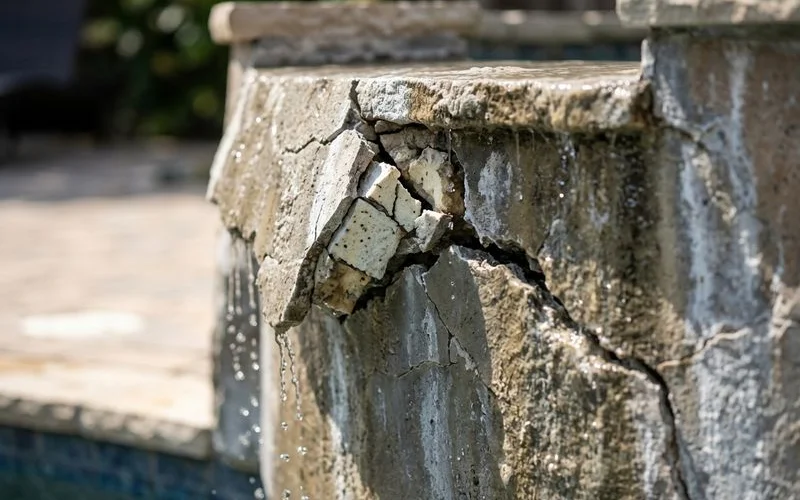
Hairline cracks along the concrete shell are the very first indication of structural stress. These fractures typically appear during years three to five as the concrete expands and contracts.
Our specialists can easily patch the surface when these cracks are still at the hairline stage. The problem escalates rapidly once the gaps open to 1/8 of an inch or wider.
Water will seep through those wider openings. This moisture penetrates the underlying structure and creates a much more expensive repair scenario.
2. Color fade or washout
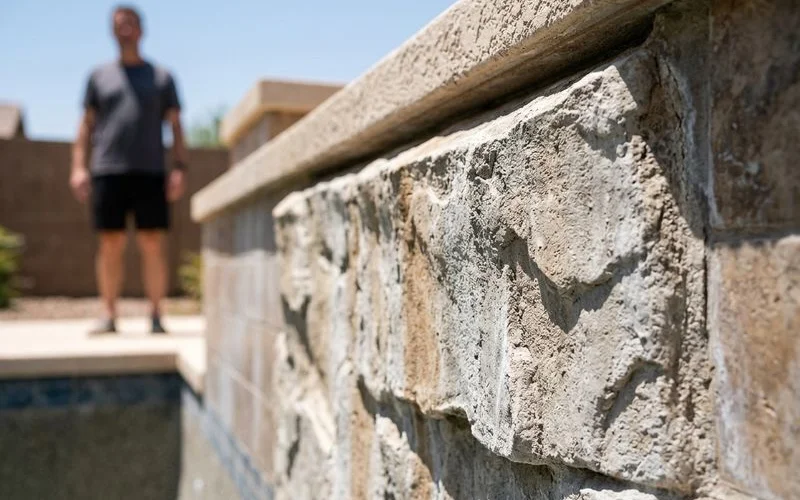
Fading colors and pinkish-grey washouts mean the protective UV topcoat on your artificial rock has degraded. The Phoenix summer sun pushes the UV index to a blistering 12.5 in July.
We know that clear acrylic sealers simply cannot survive that level of solar radiation forever. Fading might seem like a purely cosmetic issue at first glance.
The real danger is that a compromised topcoat leaves the underlying concrete binder fully exposed. This direct exposure leads to surface brittleness and micro-cracking much sooner than the national average.
3. Exposed foam core
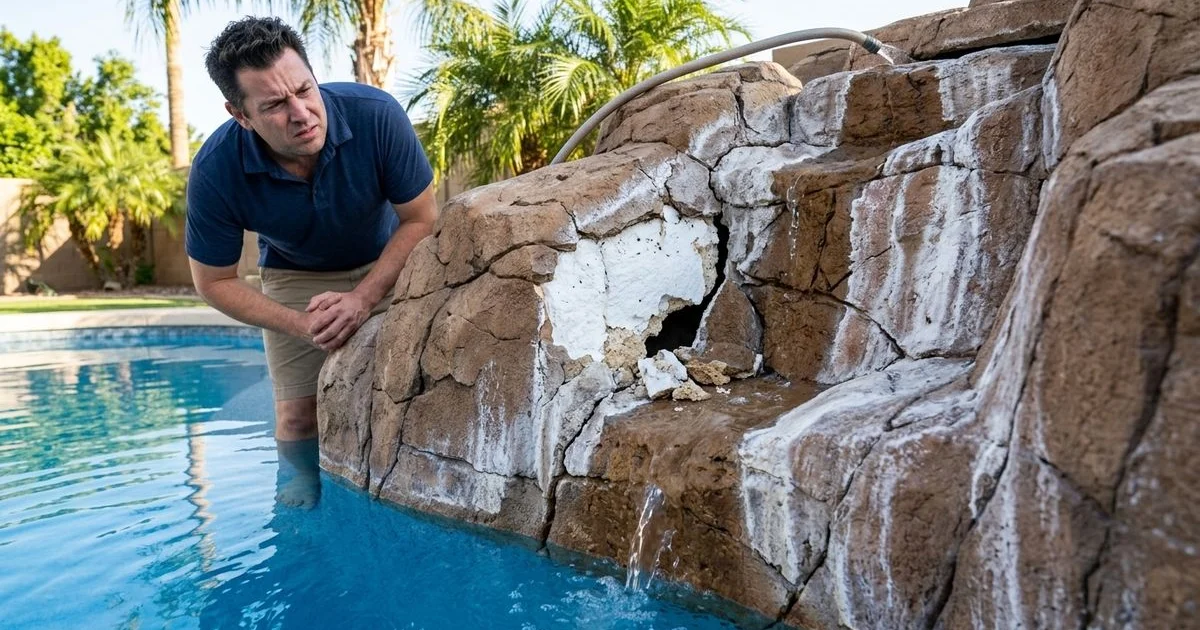
Seeing yellow or white foam through widened surface cracks means the protective shell has failed. Artificial pool rock features rely on a shaped polyurethane foam core for their structure.
Our technicians can often save the feature at this stage by patching the shell and encapsulating the foam. You must act quickly before heavy water intrusion begins.
Direct sunlight causes rapid chemical breakdown in exposed polyurethane in several ways:
- UV rays turn the foam brittle and weak.
- The material shrinks away from the concrete shell.
- The internal structure loses its weight-bearing strength.
4. Water leaks from structure
This is the urgent sign
Water visibly leaking from inside the waterfall (not just over it) means the structural shell has been breached. Left alone, that water saturates the foam core and accelerates failure dramatically. Act fast.
Water escaping through the rock seams rather than the main spillway indicates a massive internal breach. This is the most critical warning sign of a failing pool waterfall.
We frequently see this lead to a destructive process called hydrolysis. The polyurethane foam absorbs the leaking water and begins to chemically disintegrate.
That water-logged foam turns into a heavy sponge. The added weight combined with the degraded material will cause the entire structure to collapse.
5. Plumbing flow issues
Uneven water flow or spouts shooting from odd angles usually point to failing PVC joints. Hard water in Maricopa County drops heavy calcium carbonate deposits inside the plumbing lines.
Our repair crews frequently find that worn gaskets or partial calcification blockages are restricting the volume. Internal cracking within the water path itself can also cause these pressure changes.
Here is a quick checklist to verify your flow problem:
- Check your pool pump basket for heavy debris.
- Inspect the main filter pressure gauge for unusual readings.
- Verify that the specific waterfall valve is fully open.
- Look for calcium buildup around the primary spillway.
6. Soft spots or give in the surface
A spongy feel when you press firmly on the rock surface means the internal foam core is completely gone. A healthy artificial rock shell will feel absolutely solid to the touch.
We consider soft spots the most difficult symptom to repair because the damage is hidden deep inside. The polyurethane foam behind that specific section has already succumbed to water rot or bacterial degradation.
You can still salvage the feature if you catch this early enough. Watch out for these secondary indicators of hidden rot:
- Hollow echoing sounds when tapping the rock.
- Unexplained calcium weeping near the soft spot.
- Slight sagging in the overall waterfall shape.
What To Do At Each Stage
Recognizing the signs your pool waterfall is failing will dictate your next step. A fast response is critical because cumulative damage compounds quickly under the harsh Arizona sun.
We created a simple breakdown to help you decide exactly how to proceed based on your symptoms. Catching a problem early will save you thousands of dollars in restoration costs.
Here is how you should respond to the different stages of wear:
| Damage Level | Visible Symptoms | Required Action |
|---|---|---|
| Early Stage | One sign, like hairline cracks or minor color fading. | Schedule an assessment. A basic cosmetic seal now prevents future water intrusion. |
| Moderate Risk | Two or more signs, such as exposed foam and reduced water flow. | Call for an immediate on-site inspection. The internal structure is actively degrading. |
| Emergency | Active water leaks combined with soft, spongy surface spots. | Stop using the feature. Water soaking into the foam core turns a simple patch job into a total replacement. |
Our team highly recommends reading the can your waterfall be repaired guide for a deeper look at salvageable features.
The waterfall repair service handles the entire spectrum of rock feature issues.
We routinely manage everything from simple cosmetic fixes to major structural restorations. Contact us today to schedule your on-site inspection and protect your pool.