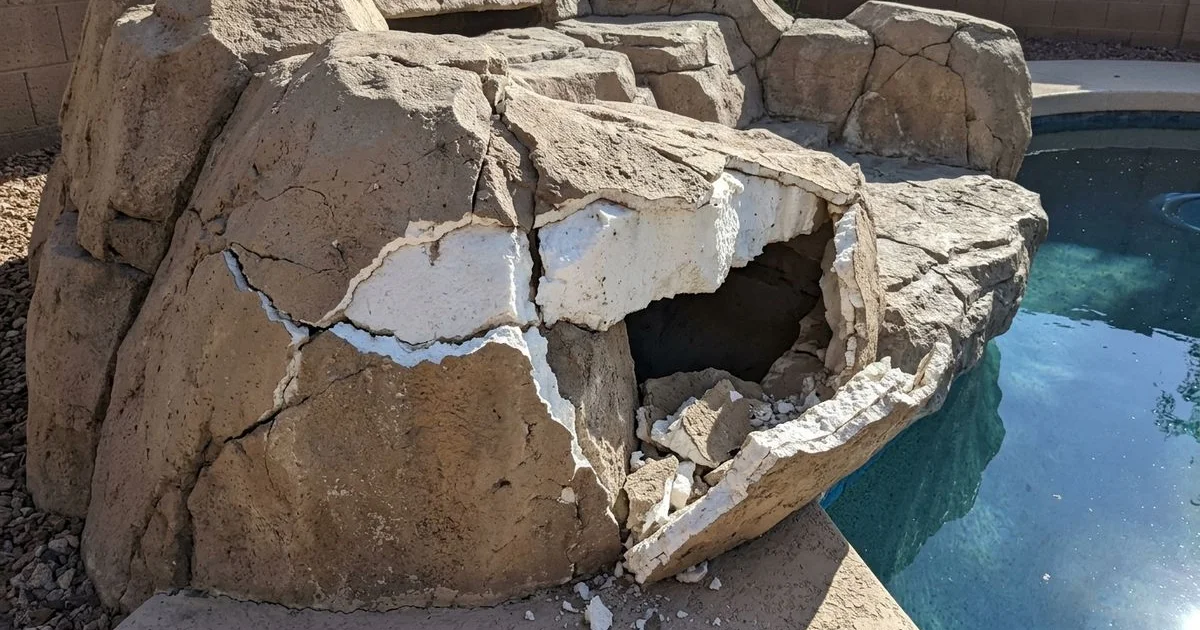
We frequently see a common issue when inspecting older backyard pools across the Valley.
David Resurface was founded with a simple mission to provide exceptional pool remodeling and resurfacing services that customers can truly rely on, and spotting these rock issues early is a big part of that commitment. Our team understands that addressing these early warning signs separates a straightforward fix from a massive reconstruction project.
This guide breaks down exactly why these structures degrade under the intense Arizona sun. We will walk through the specific failure points, outline the exact steps of a lasting foam waterfall repair phoenix process, and share the real costs involved.
Why Foam Waterfalls Are Common
We recognize that foam-core artificial rock waterfalls became incredibly popular in pool construction throughout the 1990s and 2000s. Builders favored these structures because they were lighter, faster to install, and much cheaper than heavy shotcrete features.
Our records show that most Phoenix backyard pools featuring an artificial rock setup from that era hide a shaped foam base underneath the hard shell. A standard foam core waterfall repair is highly sought after today because thousands of these specific water features are now reaching the end of their original lifespan.
How They Fail in Phoenix
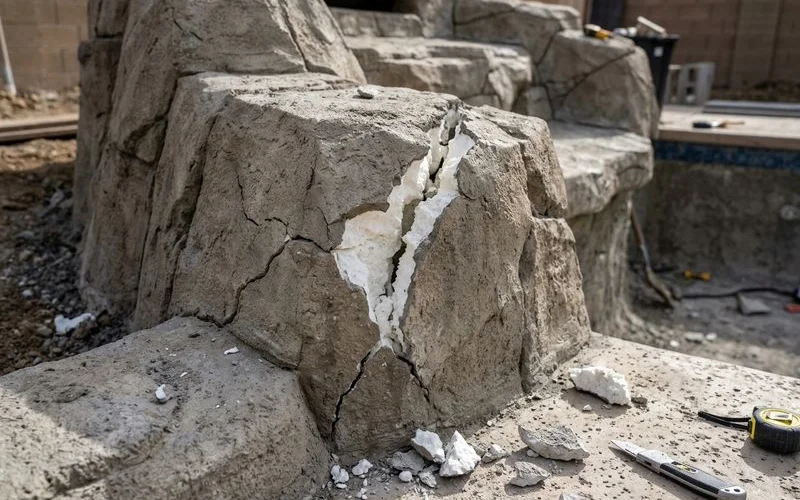
We always check for three specific failure modes that compound over time in our desert environment. The intense local climate accelerates wear, making early intervention critical to save the structure.
- UV Shell Breakdown: The outer stain and sealer degrade rapidly under the brutal sun. Concrete surface temperatures can easily soar over 150°F during peak summer, leading to photodegradation that breaks down the chemical bonds in the shell.
- Thermal Cycling: The foam base and the concrete shell expand and contract at completely different rates. The extreme temperature swings from 110°F summer days to cooler desert nights stress the bond between these materials, causing micro-fractures over five to ten years.
- Water Intrusion: Pool splash and monsoon rainwater enter the core once those initial cracks open. Waterlogged foam dramatically accelerates the failure of the entire rock shell, especially when exposed to corrosive pool chemicals like chlorine or salt.
Our crews find that by the time a feature visibly exposes the white foam layer, the underlying damage has been silently compounding for two to four years. Catching the issue at the first sign of a crack prevents catastrophic structural failure.
Our Foam Waterfall Repair Approach
We follow a strict, multi-step process to ensure your repaired water feature lasts for another decade. Fixing a failing artificial rock setup requires precise techniques and modern materials to withstand the elements.
Inspection and triage
Our first step is to carefully probe the exposed foam for firmness and actual water content. Firm, dry foam indicates the structure is highly repairable.
We must assess any soft or completely waterlogged sections for partial or full replacement before moving forward. Accurate triage prevents wasting money on a feature that lacks a solid foundation.
Structural shell prep
We route the existing cracks wider to create a clean bonding surface at the foam-shell interface. All compromised, rotting foam sections are completely removed from the interior cavity.
Our technicians rebuild the shell cleanly from the base up rather than patching over old residue. This thorough preparation ensures the new concrete will anchor securely to the healthy core.
Foam encapsulation
The step that separates lasting repair from quick failure
We apply a polyurea or cementitious encapsulation layer directly to the exposed foam before any shell rebuilding. This seals the foam from future water exposure, the single biggest factor in making the repair last 10+ years vs 2-3.
We exclusively use an advanced polyurea encapsulation layer directly on the exposed foam before starting any shell reconstruction. This polyurea coating cures in seconds and provides four times the durability of standard epoxy sealers, creating a 100% waterproof shield.
Our application process completely blocks future moisture from reaching the sensitive inner core. Sealing the foam correctly is the single biggest factor in making the repair last over ten years instead of failing again in two.
Shell reconstruction
We apply new concrete-shell material over the encapsulated foam in thin, careful passes. The fresh material is skillfully sculpted to match the surrounding geology and existing rock texture.
Our team allows the new concrete to fully cure before moving to the finishing stages. Proper curing time guarantees maximum strength and prevents the patch from delaminating down the road.
UV-stable staining and sealing
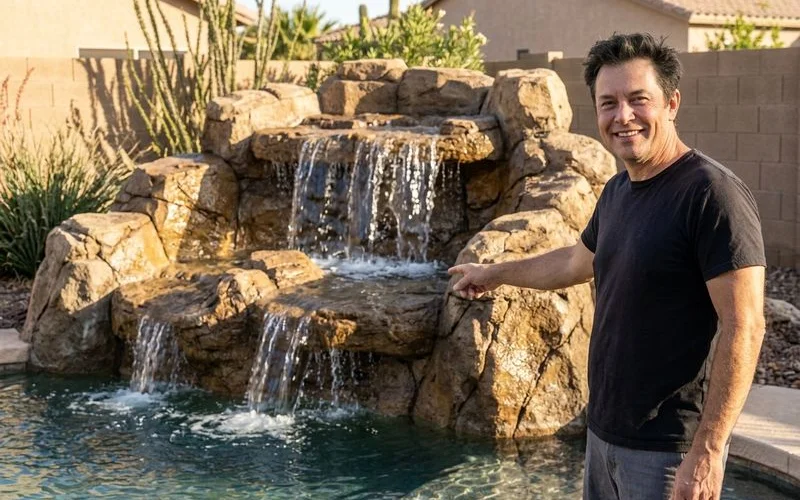
We finish the job with a multi-layer mineral stain that is perfectly color-matched to your existing rockscape. A penetrating, UV-stable sealer is then applied to lock in the color and block out harmful sun damage.
Our process uses the exact same highly durable staining system featured across our full waterfall restoration process. High-quality sealers are essential for preserving the vibrant look of the rocks against harsh ultraviolet rays.
Cost and Timeline
We currently see typical foam waterfall repairs running between $2,500 and $6,500, depending heavily on the total scope of the damage. Recent 2026 industry data shows that a complete custom pool waterfall replacement averages much higher, making restoration a smart financial choice.
Our standard project timeline spans just three to seven days, depending on the extent of the necessary foam work and re-staining. The financial difference between fixing the core and starting from scratch is substantial.
| Service Type | Average 2026 Cost | Expected Timeline |
|---|---|---|
| Professional Foam Repair | $2,500 - $6,500 | 3 - 7 Days |
| Basic Waterfall Replacement | $9,000 - $12,000 | 2 - 3 Weeks |
| Custom Rock Grotto Replacement | $15,000 - $30,000+ | 3 - 5 Weeks |
When Full Replacement Is Honest
We will tell you straight when attempting a repair is simply a waste of your hard-earned money. Certain types of severe structural damage require tearing the feature down completely.
- Massive Water Logging: Waterlogged foam spreading across more than 30 to 40 percent of the feature is unsalvageable.
- Shell Failure: Extensive structural shell damage that goes far beyond isolated spot repairs compromises the entire system.
- Base Movement: Active soil settlement or base movement means the foundation itself is failing, cracking any new work instantly.
Our experience shows that these extreme cases are actually the minority. Most aging artificial water features across the Valley are completely salvageable with the right techniques.
The Next Steps for Your Pool
We want to help you protect your backyard investment before the damage spreads further. Ignoring the signs of a foam pool waterfall failing will only lead to more expensive structural problems down the road.
Our team is ready to evaluate your specific situation and provide a clear path forward. Check out Our waterfall repair service to schedule your free inspection and get your feature looking pristine again.