We regularly see 10- to 15-year-old pool finishes in Phoenix struggling against our desert environment.
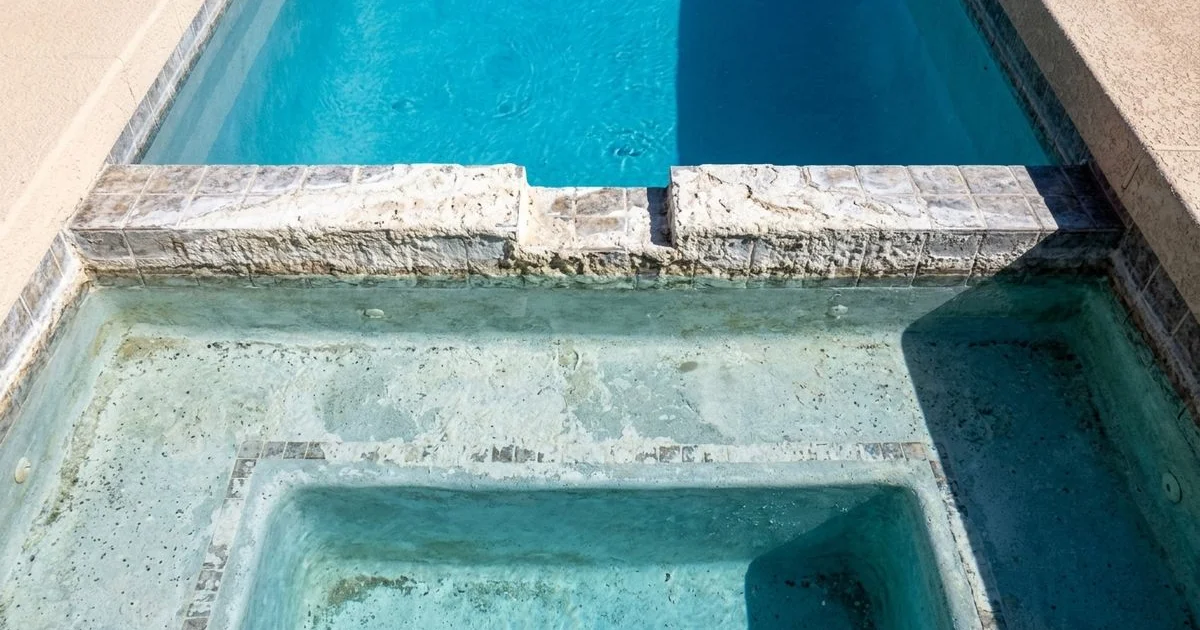
It is a common frustration for homeowners watching their plaster fade and develop sharp white crusts along the tile line. Our team at David Resurface understands that hard water and extreme heat accelerate this damage faster than in other climates, which is why we built our business on providing remodeling services you can truly rely on.
You probably notice the scaling getting worse every summer, especially during July and August. We have developed a specific process for pool calcium scaling resurfacing to handle these stubborn mineral deposits before laying down a new finish.
Let’s look at the data driving this problem and explore practical prep and color choices to protect your investment. Our hard-water prep is a standard part of every Phoenix Pebble Tec resurfacing project.
Why Phoenix Water Scales Pools
Phoenix tap water natively contains high mineral levels, with recent water reports showing average calcium hardness between 210 and 350 ppm. Our team knows this concentration easily exceeds the 200 ppm requirement for pool stability, creating an environment primed for heavy scaling.
A typical 16-by-32 foot uncovered Arizona pool loses 4 to 6 feet of water annually. We see the real damage happen when 60 to 120 gallons evaporate daily during peak summer.
The pure water vanishes into the dry air, leaving the heavy calcium behind to multiply.
Our crews must then manage the inevitable result of this continuous cycle. Visible white scale builds up at the waterline, while white streaks appear on the floor.
We frequently find a stubborn haze on the finish that eventually bonds chemically to the cement matrix of whatever surface you have.
Required Prep for Scaled Pools
Proper preparation physically removes the bonded calcium so the new interior can grip the concrete shell directly. We consider skipping this crucial step the number one cause of premature finish failure.
Skipping scaling prep is the #1 cause of premature finish failure
A new finish applied over residual calcium scale bonds to the scale, not to the pool shell. As the scale flakes (it always does), the new finish comes with it. Proper prep is non-negotiable on Phoenix pools with visible hard-water damage.
We evaluate every project to determine the exact level of intervention required. The specific method depends entirely on the severity of your existing hard-water damage.
Our typical resurfacing projects allocate $1,000 to $3,000 for proper scale removal and shell preparation.
Pool Calcium Scaling Resurfacing Prep Methods
Three main prep options exist for older pools:
- Acid wash: This approach works best for light scaling, which usually appears as a cosmetic haze without raised deposits. We use a controlled pool acid wash scaling removal to neutralize the surface and dissolve thin mineral layers safely.
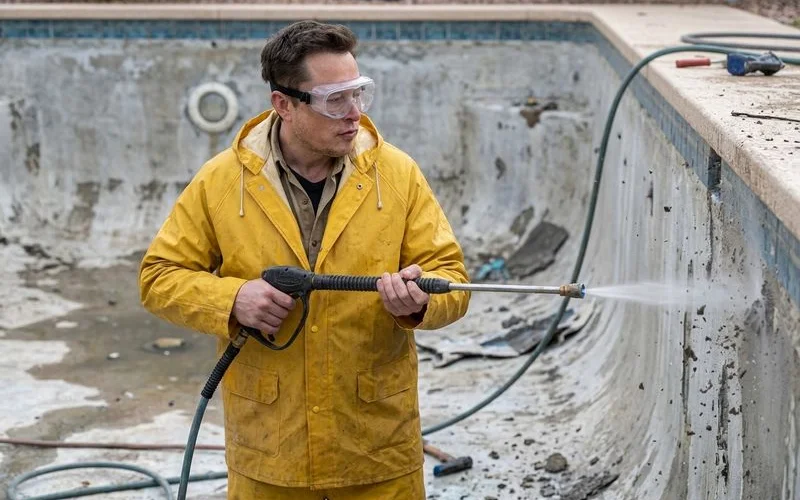
- Hydroblast: A 40,000-psi hydroblast strips the scale and the top layer of compromised plaster. Our technicians recommend this for moderate to heavy scaling featuring raised calcium rings or heavily bonded deposits to create a clean substrate.
- Full chip-out: This aggressive method tackles severe scaling with underlying plaster delamination. We use pneumatic jackhammers and air chisels to remove the aged plaster entirely down to the raw gunite or shotcrete shell.
Rebar Inspection During Prep
Structural integrity checks happen immediately after removing the old surface material. Our team knows scaled pools are often older pools, and these aging structures frequently hide rebar expansion or exposure underneath the original finish.
The stripped shell requires careful inspection for rust staining, spalling concrete, and visible surface rebar. We treat small exposures with a commercial-grade rust converter and apply a durable patch.
Significant structural issues escalate the scope before any new finish goes on. Our crews frequently encounter cracks along the bond beam, the critical concrete strip supporting the inground pool wall.
Repairing a damaged pool bond beam typically costs $70 to $80 per linear foot and often requires replacing the adjacent tile. We ensure the structural concrete is completely sound so your new investment rests on a solid foundation.
| Common Prep-Stage Repair | Average Cost Impact | Purpose |
|---|---|---|
| Rust Converter & Patch | Included in base prep | Seals minor rebar exposures |
| Bond Beam Repair | $70 to $80 per linear foot | Fixes structural wall cracks |
| Extensive Chip-Out | $1,000 to $3,000 | Removes severe delamination |
Color Choices That Hide Future Scaling
Selecting the right finish color directly impacts how quickly hard water pool stains in Phoenix become a daily eyesore. Our design consultants know white plaster shows calcium scaling first, as the bright background makes any mineral buildup obvious.
Darker, speckled finishes successfully hide this visual damage much longer.
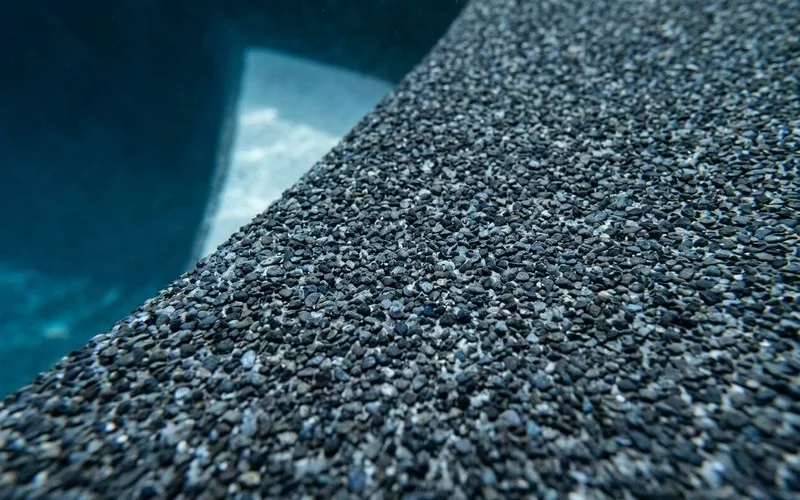
We compare the lifespan and visual longevity of various finishes to help you make a smart investment. Standard white plaster typically costs $6,000 to $8,000 but starts showing scale onset within just 1 to 2 years in Phoenix.
Our team installs many aggregate finishes because they resist staining from high-alkalinity water beautifully. Premium pebble interiors run between $7,000 and $15,000, yet they easily last 15 to 20 years.
We highly recommend reviewing these proven color and material options for Arizona backyards:
- Pebble Tec darker blends: Colors like Irish Mist and Blue Surf effectively hide visual scale for 3 to 5 years.
- Diamond Brite finishes: Shades like Midnight Blue or Cobalt hold off the visible white haze exceptionally well.
- Classic white plaster: This budget-friendly option highlights scale onset quickly, often requiring more frequent cosmetic maintenance.
The minerals still accumulate on the surface over time, even if you cannot see them. We remind every client that hiding scaling does not mean you are preventing it.
A darker color simply buys you more time before the pool needs its next acid-wash refresh.
Post-Resurface Chemistry Rules
Protecting your new plaster requires immediate and strict attention to water chemistry. Our maintenance professionals focus heavily on the Langelier Saturation Index (LSI) to predict if water will deposit or dissolve minerals.
Maintaining proper balance stops the destructive calcium cycle from restarting. We recommend keeping the LSI between 0.0 and +0.3 to prevent both etching and scaling.
These specific chemical windows minimize fresh scaling and protect the delicate cement matrix during its curing phase:
- Alkalinity: Maintain between 80 and 120 ppm.
- pH Levels: Keep strictly between 7.4 and 7.6.
- Calcium Hardness: Monitor closely between 200 and 400 ppm.
Our Pebble Tec lifespan guide provides an honest 15- to 20-year framework for Phoenix pools once the prep and chemistry are right. Ignoring these targets often leads to rapid deterioration, turning a beautiful pool into an expensive headache.
We offer comprehensive on-site assessments for pool calcium scaling resurfacing to evaluate your current plaster. The standard scope of our Pebble Tec resurfacing service includes hard-water prep, ensuring your new finish starts with a perfect foundation.
Reach out today to secure your investment and enjoy a pristine swimming experience all season.