You know how fast the desert climate ages exterior materials.
At David Resurface, our entire mission is providing reliable pool remodeling in these harsh conditions. The sun takes a brutal toll on backyard hardscapes every single day. When clients ask exactly how long does pebble tec last, the published 20-year lifespan often feels like a theoretical maximum.
We are going to look at the data, what it actually tells us about finish durability, and explore practical ways to respond. First, the honest timelines require a closer look. Then, the exact maintenance workarounds that prevent early failure will be covered. If your finish is already past its prime, see our Pebble Tec pool resurfacing service for Phoenix-ready prep and install.
The Honest Arizona Number
We find that 15 to 20 years is the honest range in real Phoenix conditions. The official pebble tec lifespan sits at 20 years on paper. The low end covers pools with aggressive chemistry or heavy hard-water scaling.
Our experience shows the high end is reached when water balance is maintained and the surface is brushed weekly. For context, traditional white plaster fails at 7 to 10 years in the same climate. This means a premium aggregate finish outlasts standard materials by two to three times.
We install both standard PebbleTec and the finer-aggregate PebbleSheen. Both options cost between $10,000 and $14,000 for a standard residential installation. They also handle the local heat identically, carrying the exact same proven longevity.
| Finish Type | Real Phoenix Lifespan | Texture Profile |
|---|---|---|
| Standard White Plaster | 7 to 10 years | Smooth initially, turns rough |
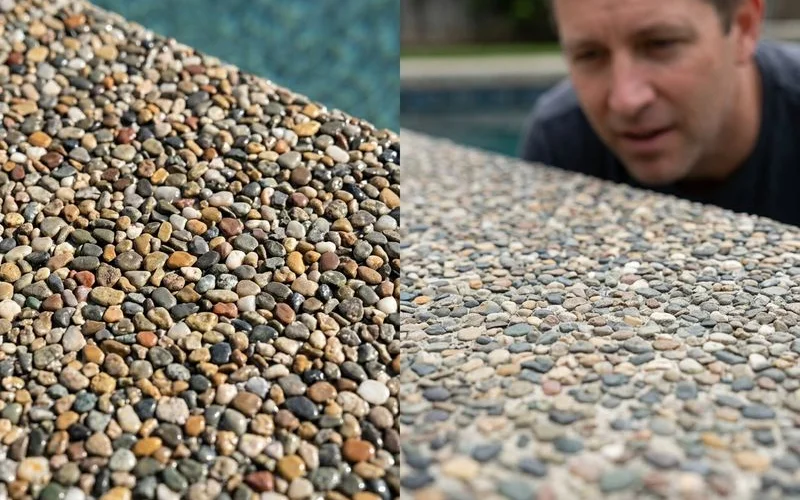
| PebbleTec (Original) | 15 to 25 years | Natural stone, textured feel |
| PebbleSheen | 15 to 25 years | Finer pebble, smoother feel |
What Shortens Pebble Tec Life in Phoenix
Our maintenance data points to three specific environmental factors that punish pools in the desert. Uncovered pools here lose 4 to 6 feet of water per year to evaporation. When evaluating pebble tec durability, Arizona heat and rapid evaporation constantly push water chemistry out of balance.
Intense UV Breakdown
We know the Phoenix sun averages 3,800 hours of bright sunshine annually. Summer months regularly see the UV index spike between 10 and 12. This intense radiation degrades the surface binder and color-bonding compounds over time, especially for darker blends.
Hard-Water Calcium Accumulation
Our municipal water supply runs exceptionally hard. Current data shows Phoenix water averages 14.9 grains per gallon, which equates to over 230 parts per million of hardness. Over the years, this calcium builds a dense scale layer.
We see this mineral buildup hide surface wear and chemically attack the cement matrix between aggregate stones. See the hard-water scaling guide for full detail. Aggressive swings from monsoon storms and pool parties drastically alter pH and chlorine levels.
Extreme Chemistry Swings
Our technicians frequently repair etched cement caused by these fluctuations. Low-calcium water will actively leach minerals right out of the plaster. High-calcium water creates a stubborn crust that damages the finish.
What Extends Pebble Tec Life
Our team recommends a few specific upgrades to your maintenance routine.
- Testing gear: The Taylor K-2006 Complete FAS-DPD kit provides precise LSI readings.
- Cleaning tools: A heavy-duty nylon brush prevents rust stains caused by steel bristles.
- Our maintenance timeline: Consistent brushing prevents algae from rooting in textured crevices.
The three-habit rule
Keep Langelier Saturation Index (LSI) between 0.0 and +0.3. Brush the surface weekly for the first year, then bi-weekly. Get a professional acid-wash every 5-7 years. These three habits alone can add 3-5 years to a Pebble Tec finish.
Precision tools give you the control needed to stop chemical damage before it starts. Consistent care actively preserves the integrity of the cement matrix. We know these minor changes make a massive difference over a decade.
Late-Stage Warning Signs
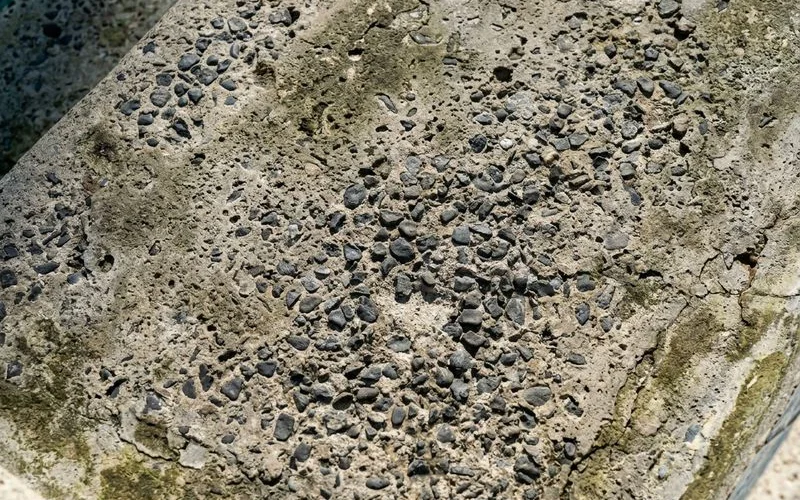
Our field inspections often reveal end-of-life wear before it gets dangerous. You can spot the decline early if you know what to look for. Catching these indicators prevents further structural damage to the pool shell.
We categorize late-stage wear into several distinct warning signs.
- Exposed aggregate: Cement recedes until the stones stand proud of the surface.
- Pitting: Small divots appear where individual stones have popped out.
- Our warning on foot-cutting texture: A surface rough enough to scratch skin is a major red flag.
- Rising chlorine demand: A porous finish past its prime heavily harbors bacteria in its micro-texture.
- Delamination: Hollow spots form when the plaster separates from the underlying gunite.
We always warn customers that an acid-wash will not buy meaningful time at this stage. The acid physically removes a thin layer of material, which only worsens the porous texture. Resurface planning is definitively the better spend.
Our Phoenix Pebble Tec resurfacing service page walks through the process and per-square-foot ranges. Realistic Arizona pricing helps you weigh your options accurately. A fresh surface immediately restores both safety and chemical efficiency.