We founded David Resurface to provide exceptional pool remodeling and resurfacing services that homeowners can truly rely on. The harsh Phoenix climate brings a peak summer UV index of 12.5, which destroys concrete coatings fast.
This intense thermal stress turns small surface flaws into expensive structural damage quickly.
Our crews know that spotting the clear signs pool deck needs resurfacing is the best way to prevent a total replacement. Here are the specific pool deck wear signs you should look for during your next backyard walk-through.
The 6-Point Deck Check
Our technicians notice that patios fail in highly predictable patterns under the intense Arizona sun. You can easily spot the early warning indicators yourself by taking a quick walk around the perimeter.
Basic resurfacing costs usually run between $3 and $8 per square foot in 2026. We want to help you catch problems now, because tearing out a ruined slab easily doubles that price.
Grab a notepad and use this six-point checklist to evaluate your concrete’s condition.
1. Color burn-out and fade
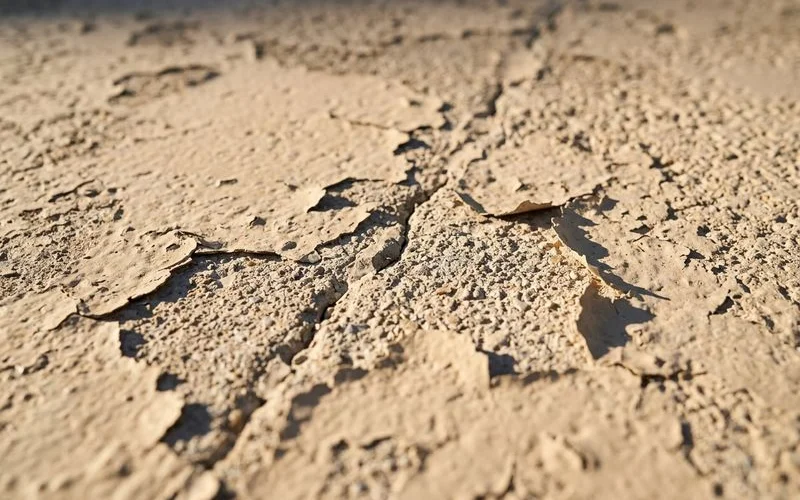
We always evaluate color consistency first, because acrylic options like Kool Deck fade long before the base layer fails. A pale, chalky appearance means the specialized UV-reflective pigment has degraded under the intense summer sun.
Bare concrete absorbs extreme heat and easily reaches 140 degrees Fahrenheit on hot afternoons. Our team recommends applying a fresh color sealer to keep the surface 15 to 20 degrees cooler.
A faded surface causes three immediate problems for your backyard oasis:
- Lost heat protection: The patio feels significantly hotter under bare feet.
- Reduced slip resistance: The chalky residue compromises your traction.
- Moisture vulnerability: The porous concrete is now completely exposed to water damage.
We know that a proactive sealer refresh quickly restores both the vibrant color and the heat-blocking performance. You will instantly notice the difference when walking outside at noon.
2. Flaking or peeling
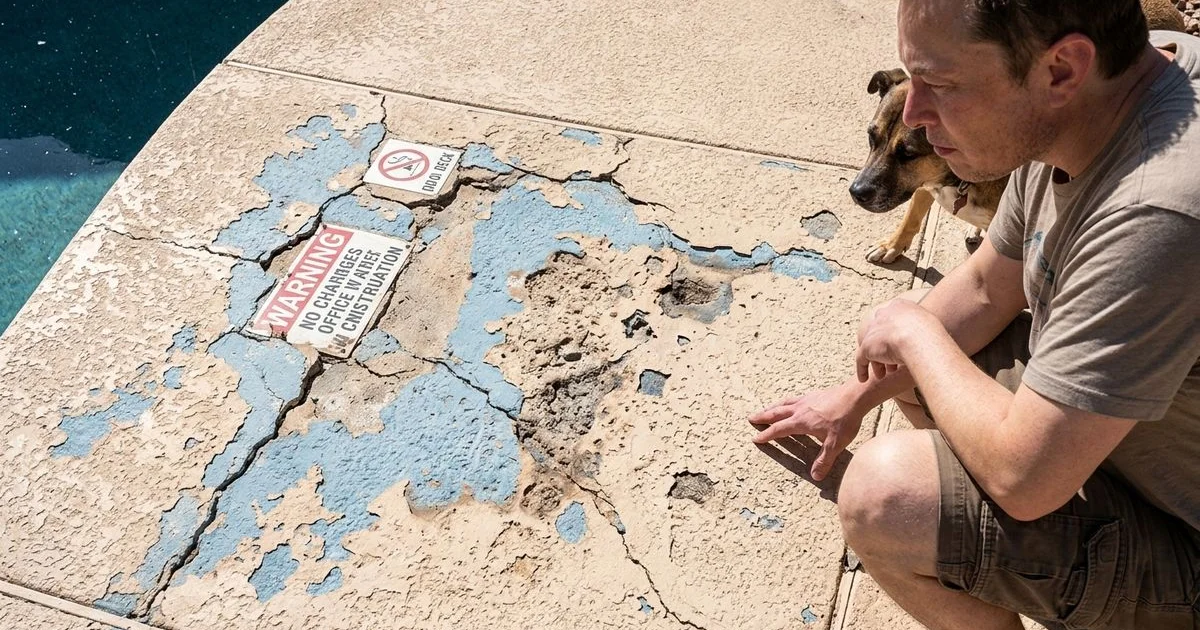
Our crew frequently sees coin-sized flakes of coating separating from the concrete, which clearly indicates a severe bond failure. This dangerous delamination happens when the polymer-modified cement loses its grip on the structural slab beneath it. Arizona hard water plays a massive role in this destructive process.
We constantly find that mineral salts from alkaline soils wick through the porous concrete and crystallize near the surface. This chemical reaction creates a white powder called efflorescence that literally pushes the protective acrylic layer right off the deck. Spot-patching these peeled sections rarely solves the underlying moisture issue.
Our specialists use a diamond grinding process to strip the old material before applying any new coat. Proper surface preparation is the only way to ensure the new overlay actually sticks. You generally need a complete refresh to create a solid, continuous water barrier again.
3. Cracks with movement
Cracks that matter vs cracks that don't
Hairline cracks that are not moving are not an urgent threat. Cracks that have visibly widened over the past year, cracks with raised edges, or cracks that let water under the surface require immediate attention before any overlay work.
We categorize patio cracks into two distinct groups to determine the safest repair strategy. Typical hairline fissures stem from natural concrete curing and do not threaten your swimming pool structure. The expansive clay soils across Phoenix cause the more dangerous, moving cracks that widen significantly over time.
Our structural experts watch for isolated sections that swell when wet and shrink during the dry months. This constant movement tears the concrete apart and creates a direct path for chlorinated water to reach the soil below. You should never just paint over a moving crack with a basic surface sealer.
We typically install structural staples or use high-pressure epoxy injections to lock the two shifting slabs together. This vital stabilization must happen before applying any new decorative acrylic finish. Water intrusion will simply wash out the sub-base if you skip this step.
4. Raised edges and trip hazards
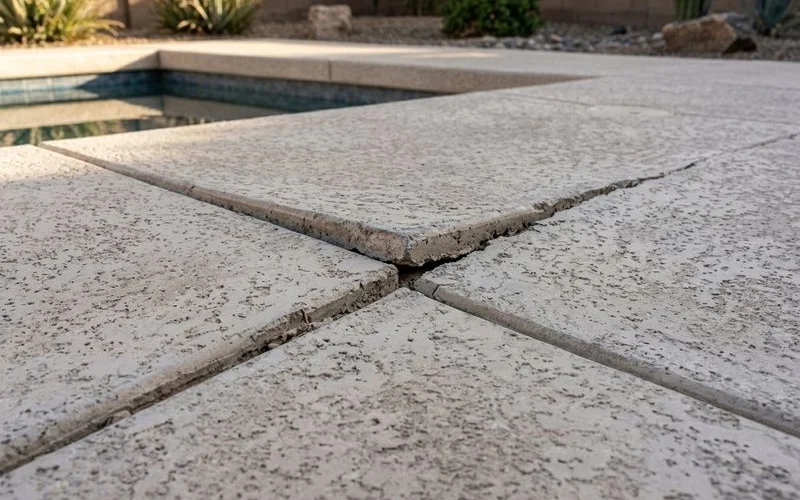
Our safety inspections immediately flag any uneven concrete joints around the swimming pool area. Soil settling or thermal expansion creates dangerous ridges where one slab sits noticeably higher than the adjacent piece. The ADA Standards for Accessible Design officially define any vertical change exceeding one-quarter of an inch as a tripping hazard.
We take this measurement very seriously to protect you from potential liability. Lawsuit exposure on residential pool decks is a massive risk if guests trip and fall on hard concrete. You have a few effective options to eliminate these raised edges permanently.
| Repair Method | How It Works | Best For |
|---|---|---|
| Concrete Grinding | Shaves down the higher edge to create a smooth slope. | Minor shifts under a half inch. |
| Foam Injection | Pumps polyurethane foam under the lower slab to lift it. | Severe sinking and large voids. |
We always evaluate the underlying soil stability before deciding which leveling technique makes the most sense. A smooth, even transition is mandatory before applying a fresh resurfacing layer.
5. Hot-foot problem returning
We hear from countless clients who suddenly cannot walk barefoot on their own patio. The desert climate brings blistering 110-degree summer afternoons, making standard concrete dangerously hot for bare skin. Your deck originally relied on a specialized heat-reflective coating, like acrylic lace, to dissipate that intense thermal energy.
Our technicians know that when this protective system fails, the surface temperature skyrockets back up to unmanageable levels. A returning hot-foot problem usually links back to severe color fade or a degraded topcoat. You should check the visual condition of the sealer before assuming the entire concrete slab needs replacing.
We often solve this uncomfortable issue with a comprehensive professional cleaning and a fresh sealer application. This straightforward maintenance step locks the heat-reflective properties back in for another five years.
6. Spalling and surface pitting
Our team defines spalling as the appearance of small, jagged craters where the concrete finish has popped out of place. This extensive damage represents a total failure of the cement base coat, rather than just a simple sealer problem. Many homeowners are surprised to learn that winter nights occasionally drop near freezing, triggering micro-damage within the porous concrete.
We see trapped moisture expand as it freezes in January and February, forcing tiny chunks of the surface layer to break away completely. Aggressive chlorine splash-back also contributes heavily to this type of surface pitting over time. The harsh pool chemicals slowly dissolve the essential cement binders holding the deck mixture together.
We must chisel out the loose debris and apply a polymer-modified patching compound to fill these open voids. Leaving spalled areas exposed guarantees the damage will spread outward rapidly. You will face a much more expensive repair bill if you ignore these expanding craters.
What To Do Next
Our final advice is to evaluate your backyard using this checklist. An aging patio showing just one or two minor issues, like fading or a returning hot-foot problem, usually just needs a basic sealer refresh.
This affordable maintenance step easily extends the life of a sound base layer for another three to five years.
We strongly recommend a complete overlay replacement if you spot multiple signs pool deck needs resurfacing, like severe flaking or deep structural cracks.
You need reliable data to make the best financial decision for your property. To understand exactly how long these materials should last in the brutal climate, see our Cool Deck lifespan in Arizona guide.
We also break down the entire repair timeline and explain all associated costs clearly. For a complete walk-through of the overlay process and precise pricing tiers, explore our Cool Deck service page for full details.
Knowing when to resurface pool deck surfaces ensures you maintain a safe, beautiful outdoor space year-round.