The Threshold: Overlay vs Tear-Out
You know how brutal the desert climate can be on exterior concrete. Our crews inspect hundreds of aging Phoenix pool surfaces every season, and we see exactly what extreme temperature swings do to a patio. Applying a cool deck over cracked concrete works beautifully for hairline and stable fractures, but wider moving gaps require structural repair first.
We know the biggest decision you face is figuring out if your specific surface is overlay-ready. That initial choice determines whether you spend $4 to $9 per square foot on cool deck crack repair or pay significantly more for a full tear-out. We see many homeowners assume a few fissures mean the entire slab is ruined.
A stable foundation can often be saved with high-performance sealants and a proper overlay. Our goal is to walk you through the exact criteria for evaluating concrete damage. This guide breaks down the three main categories of fractures and explains the precise preparation steps required for a successful repair.
We categorize these concrete issues into three specific width thresholds.
Cosmetic hairlines under 1/16 inch: These tiny fissures are perfectly fine for an overlay. Our application of the Cool Deck base coat easily bridges these gaps without any special structural patching.
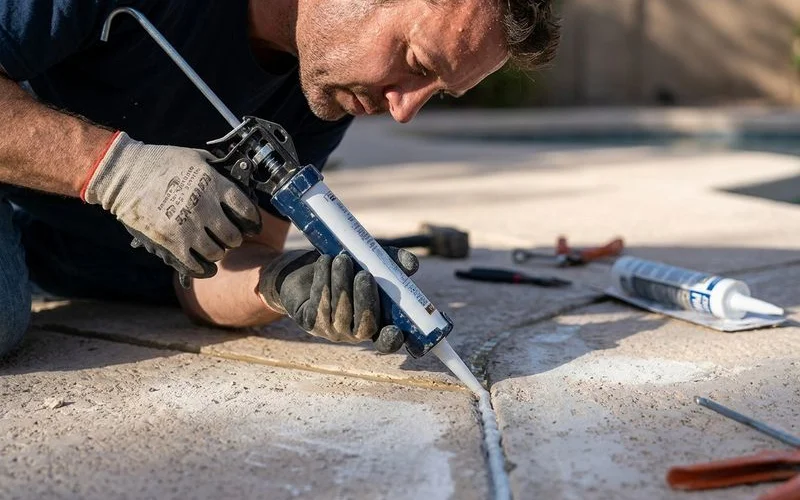
Stable cracks from 1/16 inch to 1/4 inch: This intermediate size requires dedicated crack-fill preparation before coating. We route the channel, fill it with a flexible polyurethane sealant like Sika 1A, and lay a protective fiberglass fabric bridge. The acrylic-cement mixture then goes over the top for a flawless finish.
Wider fractures, active movement, and slab boundary gaps: Any opening larger than 1/4 inch requires structural intervention first. We cannot rely on polyurethane fill alone to stop a moving concrete slab from telegraphing damage right through a fresh overlay.
Signs Your Deck Is Moving
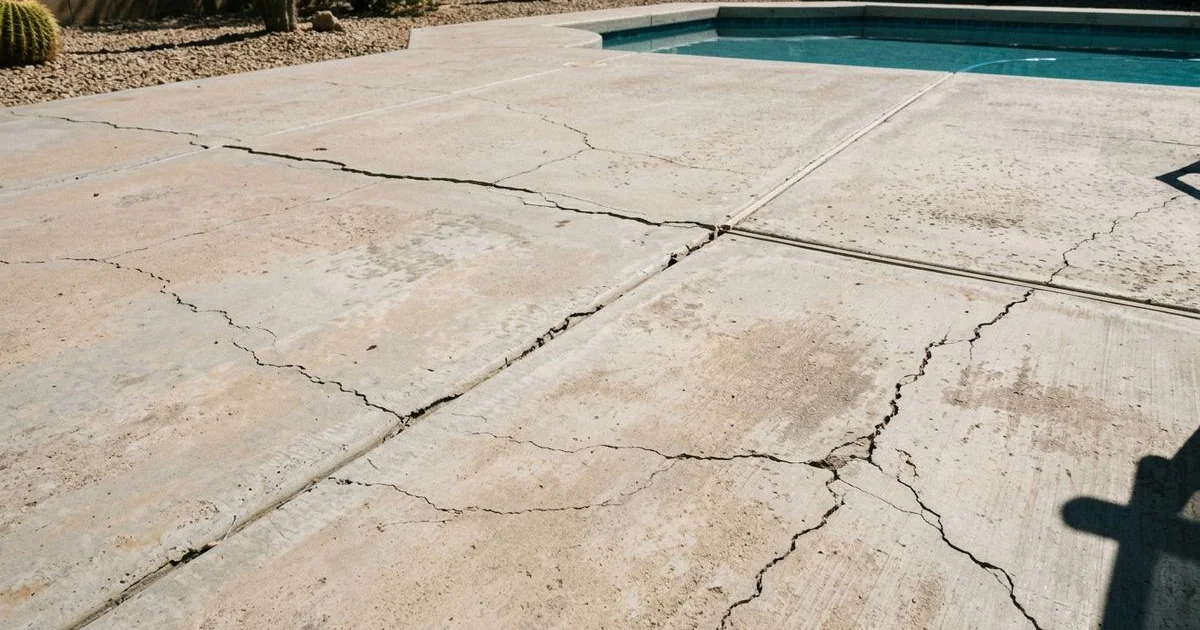
Active concrete settling leaves very clear visual clues across your patio. Finding these signs early helps you decide whether to simply overlay cracked pool deck surfaces or invest in foundation repairs. We always evaluate the underlying soil conditions before recommending a coating.
The Impact of Arizona Soil
Our local climate plays a massive role in concrete damage. Summer monsoon rains saturate the ground, which causes expansive clay soils to swell and heave upward against your slab.
We see this immense hydrostatic pressure force the concrete to lift and fracture. Dry desert periods then cause that same soil to contract.
The retreating dirt leaves empty voids beneath the concrete, causing the heavy slab to sink under its own weight. We strongly recommend addressing this shifting soil cycle before applying any new aesthetic coating.
Visual Indicators of Active Shifting
Structural failure leaves undeniable clues on the surface. Our technicians look for three clear warning signs that prove the ground underneath is actively moving.
- Raised edges at fracture lines: One side of the concrete sits noticeably higher than the other, creating a tripping hazard.
- Widening over time: A gap that measured 1/8 inch last summer expands to 3/16 inch or larger this year.
- Damage at slab boundaries: Expansion joints are designed to handle normal flexing. A fracture running directly through an expansion joint indicates severe structural heaving.
We must perform structural leveling, polyfoam injection, or partial demolition if any of these conditions exist. Applying a cosmetic coating over an actively sinking slab will simply result in ruined acrylic within a few months.
The Prep Process
Proper preparation guarantees the longevity of your pool deck coating. We follow a strict seven-step sequence to ensure the new layer permanently bonds to the old concrete.
The exact sequence for preparing stable, overlay-approved surfaces involves targeted filling and bridging techniques.
Step-by-Step Restoration
- Route the crack slightly wider to create a fresh, clean bond surface.
- Clean the entire channel thoroughly using high-pressure compressed air.
- Fill the gap with a premium polyurethane elastomeric sealant.
- Lay a sturdy fiberglass fabric directly over the wet sealant to bridge the gap.
- Bond-coat the entire deck area to unify the surface texture.
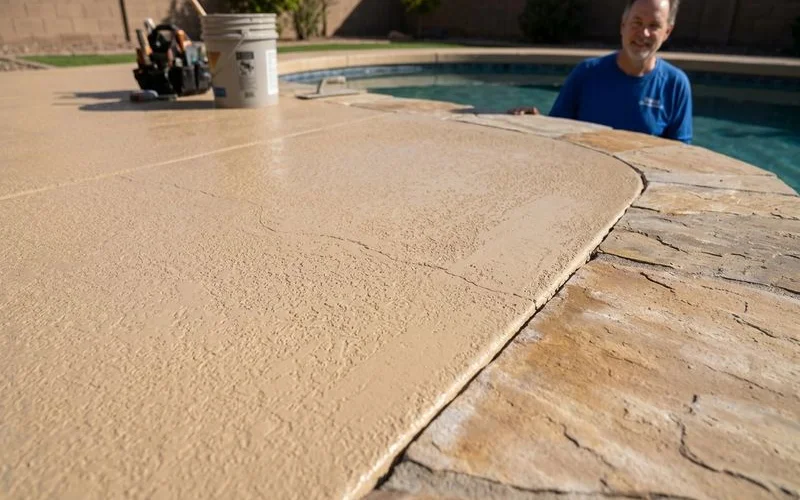
- Apply the classic Cool Deck acrylic-cement overlay mixture.
- Finish with a durable, UV-resistant color seal.
Why Material Choice Matters
We intentionally use polyurethane sealants, such as Sika 1A, instead of rigid epoxies for these repairs. Phoenix temperatures regularly swing from near freezing on winter nights to surface temperatures exceeding 150°F in direct summer sunlight.
We rely on polyurethane because it remains highly flexible under extreme thermal stress. A rigid epoxy filler would easily snap and ruin the new coating as the concrete naturally expands and contracts.
Our flexible bridging technique allows the underlying slab to move slightly without transferring that stress to the beautiful new surface above.
Expansion joints must remain
If your patio has expansion joints at slab boundaries, they need to stay in place or be reinstalled in the overlay. Skipping expansion joints transmits base movement through the new layer and fractures it within one to two years.
When Tear-Out Is the Right Call
Sometimes the most honest advice is complete replacement rather than a simple cosmetic fix. Tearing out the concrete is the only permanent solution when the structural integrity of the slab has completely failed. We never suggest covering up severe damage that will inevitably destroy a fresh coating.
Recognizing Severe Deterioration
A classic acrylic coating typically lasts 10 to 12 years in Arizona, while newer polyaspartic options can survive up to 20 years. Still, no surface material can survive if the foundation beneath it crumbles. We look for specific red flags that disqualify a patio from being resurfaced.
Full concrete replacement beats a surface repair under these four conditions:
- Structural damage: This includes issues requiring fresh rebar grids or heavy shell work to stabilize the pool structure.
- Severe settling: Extreme elevation changes and deep voids that cannot be safely re-leveled with foam injection.
- Extensive spalling: The base concrete is heavily pitted, flaking, and deteriorating far beyond the scope of a standard overlay bridge.
- Multiple failed overlays: Finding two or more prior acrylic layers that have both fractured indicates a deeper foundation issue.
Next Steps for Your Patio
Our team is ready to help you make an informed decision. For walking through your specific patio condition, our Cool Deck service includes a free on-site inspection.
We evaluate your concrete’s bond strength and test for hidden delamination.
If you are not entirely sure whether your surface is ready for an upgrade, the deck signs-needs-resurfacing guide features a comprehensive 6-point check. This resource helps you spot problems before they turn into expensive foundation repairs.
Contact us today to schedule your assessment and start your patio restoration.