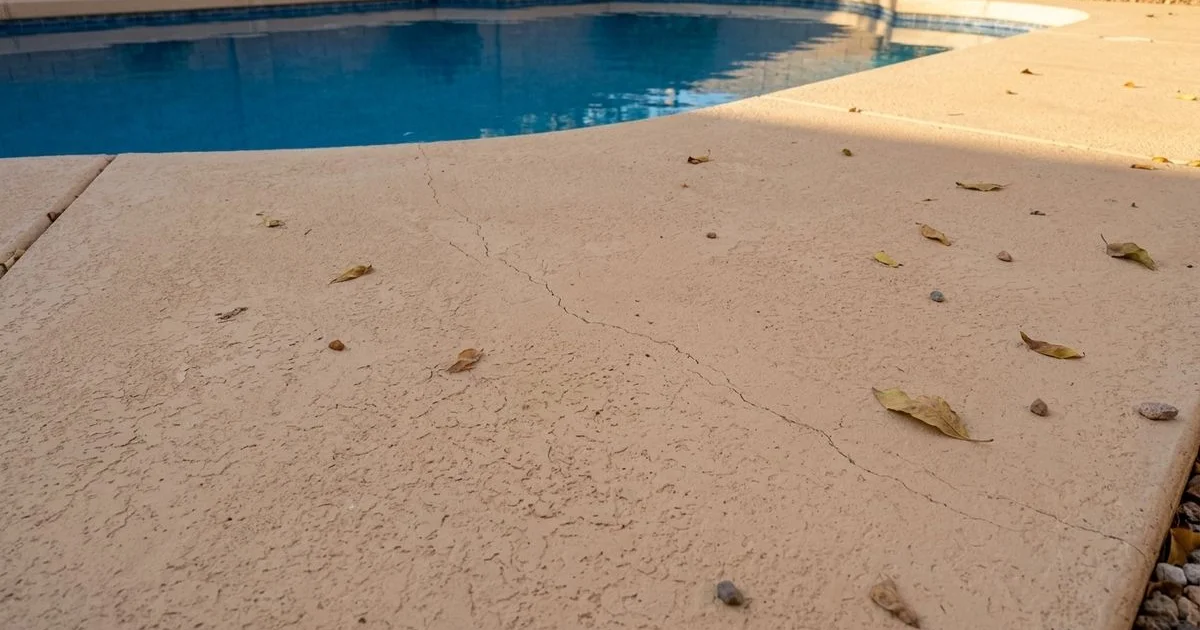
We notice a distinct pattern with aging pools: homeowners often get frustrated when their deck starts looking chalky and tired after just a few short years. That frustration usually stems from a misunderstanding of how extreme desert conditions actually break down surface materials.
We founded David Resurface because customers deserve reliable answers about their pool remodeling investments, starting with a clear explanation of exactly how long does cool deck last under constant Arizona sun. The reality is that surface temperatures in Phoenix regularly exceed 150°F during the summer. This extreme heat puts immense stress on any exterior coating.
We are going to break down the exact timeline you can expect from these surfaces, explore the factors that cause early failure, and outline simple habits to protect your investment.
How Long Does Cool Deck Last? The Phoenix Range
Cool deck surfaces in Phoenix typically last 5 to 10 years before requiring significant attention. The bottom end applies to darker colors on full-sun west-facing decks, while the top end applies to lighter sand colors with moderate shade exposure.
We find that this lifespan reflects two primary wear modes: color-sealer fade and base-coat failure. The UV-reflective pigment degrades first, leading to fading. Eventually, the acrylic-cement layer underneath begins flaking, spalling, or cracking.
To help you understand the difference, consider this simple comparison:
| Wear Mode | What Fails | Visual Sign | Typical Timeline |
|---|---|---|---|
| Color-Sealer Fade | The protective topcoat | Chalky appearance or washed-out color | 3 to 5 Years |
| Base-Coat Failure | The acrylic-cement bond | Flaking, pitting, or deep cracks | 7 to 10 Years |
Our team routinely sees sealer fade happen much earlier than structural issues. Catching that fade early gives you more affordable repair options.
What Shortens It
The cool deck lifespan is primarily reduced by intense UV exposure, harsh pool chemicals, and rapid temperature swings. These environmental factors accelerate the breakdown of the protective sealers.
We track local weather patterns, and the historic summer of 2024 saw a record 70 days with temperatures exceeding 110 degrees in Phoenix. That kind of relentless heat bakes the surface, causing microscopic movement between the acrylic topping layer and the structural concrete slab below it.
Here are the specific factors that destroy your surface prematurely:
- Darker color choice: Blues, greens, and dark greys absorb significantly more UV radiation and break down much faster.
- Full west or south sun: Afternoon sun is extremely intense, and west-facing decks take the most abuse during peak heat hours.
- Chlorine and salt splash-back: Aggressive chlorinated water acts as a strong oxidizer, bleaching the concrete sealer chemically. Saltwater pools are even worse, as evaporating water leaves behind salt deposits that cause a corrosive process known as spalling.
- Winter freeze-thaw cycles: Overnight lows below freezing combined with wet surfaces cause micro-expansion, opening small cracks in the acrylic-cement layer.
Our inspections show that ignoring these elements will cut your deck’s lifespan in half. Taking proactive steps can offset these harsh conditions.
What Extends It
To maximize kool deck durability, Arizona homeowners can significantly extend the life of their surface by choosing lighter colors, managing chemical exposure, and sticking to a consistent recoating schedule. These simple practices reduce thermal stress and prevent moisture intrusion.
We highly recommend selecting specific heat-reflective colors like Desert Sand or Sedona Tan. Light sand, tan, and white shades extend the sealer life meaningfully by reflecting UV rays rather than absorbing them.
Routine maintenance requires the right tools. When washing the surface, keep your pressure washer under 1500 PSI to prevent accidental etching of the delicate acrylic layer.
Shaded areas naturally perform better over time. Pergola-covered spaces and east-facing decks easily stretch toward the 10-year high end of the lifespan range.
The three Cool Deck longevity habits
Pick a light color (sand, tan, or light grey). Rinse chlorine or salt splash-back off the deck weekly using a standard garden hose. Recoat the sealer at year 5 to 7 before full failure. These three steps alone can push a surface into its 10-year range.
When a Re-Coat Is Enough
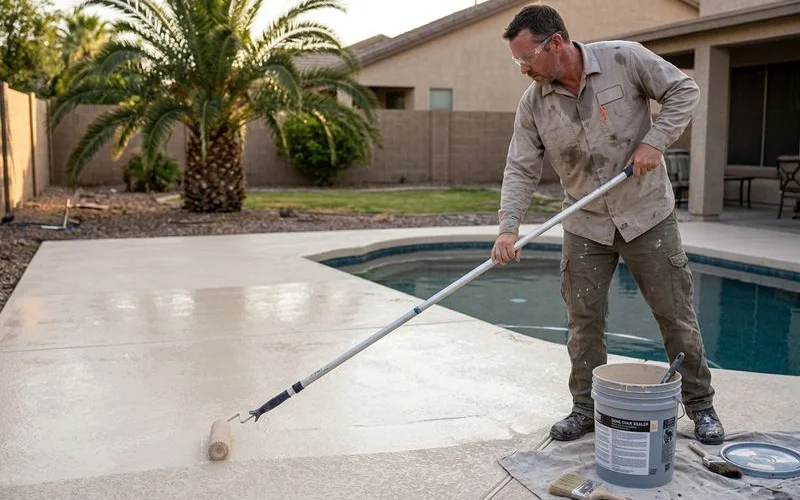
A sealer-only re-coat is sufficient when your base acrylic-cement remains structurally sound but the top color has faded. This maintenance step refreshes the protective barrier before deeper damage occurs.
We advise clients to look for a few specific conditions to confirm a re-coat will work.
- The underlying concrete shows no flaking and no deep cracks.
- Color fade is the primary visible issue.
- The original slip-resistant texture has not worn completely smooth.
In the Phoenix area, 2025 and 2026 pricing data shows that a basic re-coat costs roughly $3 to $6 per square foot. It costs roughly 30% to 40% of a full overlay and adds 3 to 5 years of life to the deck.
Our financial advice is straightforward for older pools. If your deck is at year 5 to 7 and still structurally sound, a re-coat is almost always the smartest investment you can make.
When Full Overlay Is Required
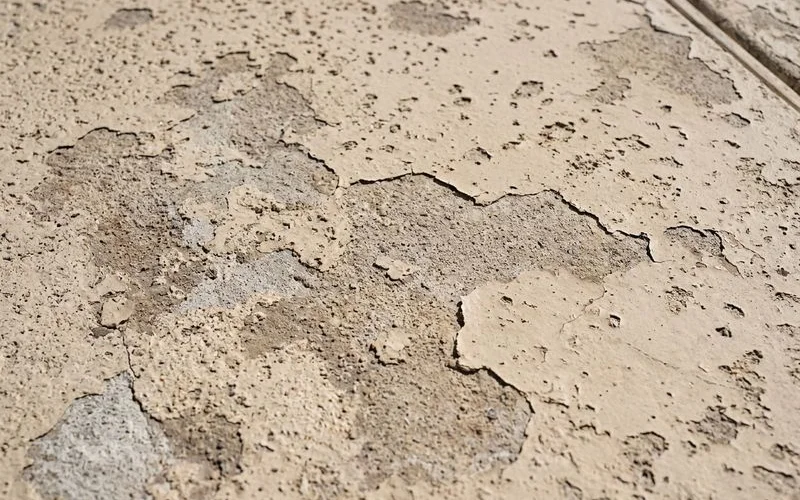
A full overlay is necessary once the coating loses adhesion to the structural slab, resulting in widespread flaking and deep cracking. At this stage, the surface is beyond simple cosmetic repair.
We define this severe damage as delamination, which occurs when the bond between layers completely fails. A simple sealer re-coat is a waste of money if you notice any of these structural red flags:
- Base coat flaking, peeling, or widespread spalling.
- Deep cracks that penetrate completely through the acrylic-cement layer.
- Surface worn entirely smooth with no grip or texture remaining.
- Spalling pits that expose the bare concrete base layer beneath.
A full resurfacing system needs to come up to current industry specifications, and standard estimates place this comprehensive work between $6 and $11 per square foot in Arizona. Removing the failing material and establishing a new mechanical bond requires professional equipment.
Our team can walk you through the necessary steps. See our Cool Deck service for the exact overlay process and current pricing, or check out our signs your deck needs resurfacing guide for a quick 6-point self-check.
Conclusion: Protecting Your Pool Deck Investment
Understanding exactly how long does cool deck last gives you a clear advantage in maintaining your outdoor space. Small preventative steps today will save you from major reconstruction bills tomorrow.
We encourage every homeowner to walk their pool perimeter this week and look for early signs of fading.
If you spot chalky colors or minor cracking, contact a licensed contractor to evaluate whether a simple recoat can save your surface.