Our team at David Resurface frequently talks with homeowners dealing with aging plaster and sudden structural shifts. The intense desert heat combined with seasonal monsoons takes a serious toll on backyard concrete.
We know from experience that answering how long does pool crack repair last depends entirely on the specific method chosen and the soil beneath your yard.
This key detail separates a permanent fix from a temporary patch. We will break down the realistic timelines for different methods and explore practical ways to respond to these common issues.
The Honest Lifespan Ranges
Professional fixes generally hold for anywhere from 5 to 15 years in the local area. We base this pool crack repair lifespan on the chosen method, the type of fracture, and the stability of your underlying soil.
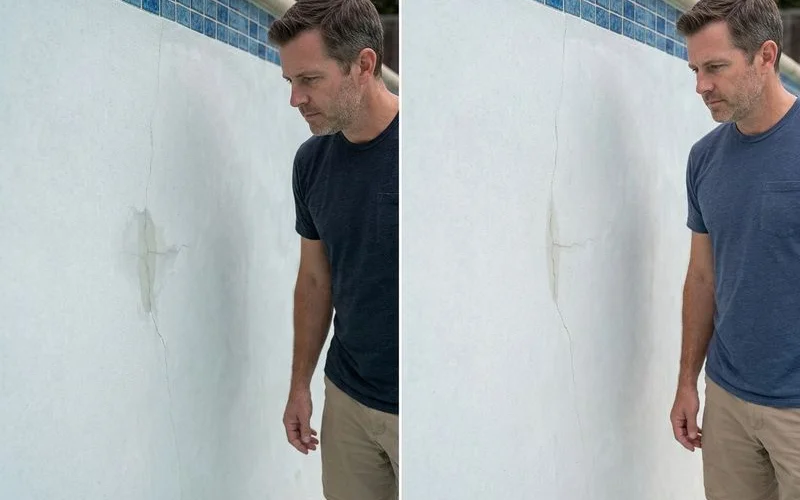
A properly matched technique on a stable surface will easily reach the high end of that range. Our crews see the worst results when the wrong approach meets ongoing ground movement.
Lifespan by Method
A proper fix requires matching the specific damage to the correct structural technique. We compiled this breakdown to show you what to expect from each approach.
| Repair method | Typical Phoenix lifespan |
|---|---|
| Injection only (cosmetic hairline) | 10-15 years |
| Stapling + injection (structural) | 10-15 years |
| Resurface with structural prep | 15-20 years |
| Wrong method for crack type | 1-3 years |
Torque Lock structural staples represent a massive upgrade over basic epoxy for major fissures. Our specialists rely on this post-tension system because it applies up to 5,000 pounds of controlled compression to prevent edges from pulling apart.
You can review the specifics in this handy injection vs stapling vs resurface guide to see which option fits your exact situation.
What Extends Repair Life
We highly recommend focusing on a few key environmental factors to maximize your investment. Certain conditions act as a protective barrier for the concrete shell.
Three factors under your control
Stable water level: Let the pool level swing widely and the shell flexes with it, stressing repairs. Drainage around the pool: Standing water in landscaping can migrate under the pool and drive soil movement. Professional method choice: The biggest lever. Wrong method means the repair is doomed before it starts.
Our team always checks the yard grading before starting a major job. Proper drainage channels monsoon rainwater away from the deck.
We use this strategy to prevent moisture from saturating the ground below and causing uneven pressure.
What Shortens Repair Life
Several specific environmental and chemical issues can ruin a perfect fix. We evaluate these risk factors during every initial inspection.
Active soil movement
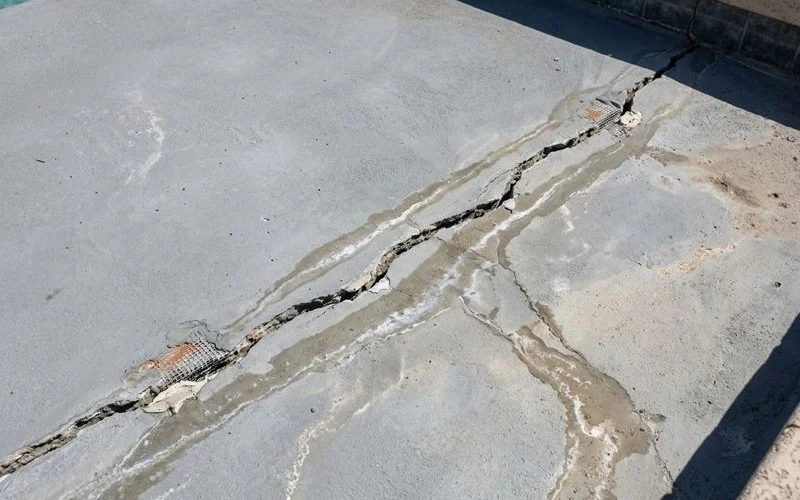
The single biggest killer for any concrete structure is shifting ground. Our crews see this constantly in neighborhoods built on expansive clay soil.
This specific type of clay swells rapidly during heavy monsoon rains and shrinks during the dry season. We know that actively moving shells will tear open a fresh seal within two to three years regardless of the technique used.
Stabilizing the foundation with structural pier work is the only permanent solution.
Wrong method for the crack
We often replace cheap fixes that failed almost immediately. Applying a basic epoxy injection to a structural fracture will usually fail within a single year, proving that proper diagnosis determines crack injection durability.
Our technicians know that putting heavy-duty staples on a tiny cosmetic flaw just wastes your money. Covering up the damage with a new finish guarantees the fracture will telegraph right through the new material in under 24 months.
Aged plaster around the crack
We warn customers that fixing a single line on an exhausted surface is a losing battle. Standard white plaster usually reaches the end of its functional life after 10 to 15 years.
Our observation is that the patched area might hold firmly while the surrounding finish continues to deteriorate. The entire basin ends up looking much worse a couple of seasons later.
Water chemistry extremes
We constantly battle the naturally hard municipal water in this region. City tap water often carries a calcium hardness level between 210 and 350 parts per million right out of the hose.
Our maintenance logs prove that consistently high calcium builds thick scale over the damaged area. Aggressive low-pH chemistry slowly eats away at the injected polyurethane resins over the years.
We suggest maintaining a balanced Langelier Saturation Index (LSI) between 0.0 and +0.3 to protect both the patch and the surrounding finish.
When To Re-Evaluate
A seal that starts visibly reopening means you need to take immediate action. We look for three specific indicators to determine the next step.
- Underlying movement is continuing (diagnose soil, drainage, or foundation issue)
- Wrong method was used originally (upgrade to stapling if injection is re-opening)
- Surrounding finish is failing (time for a full resurface)
You need a proper evaluation to prevent further structural damage. The experts at our pool crack repair and leak detection service handle both the repair and the honest diagnosis when repair is not the right next step.
We are ready to help you secure the structural integrity of your backyard oasis.