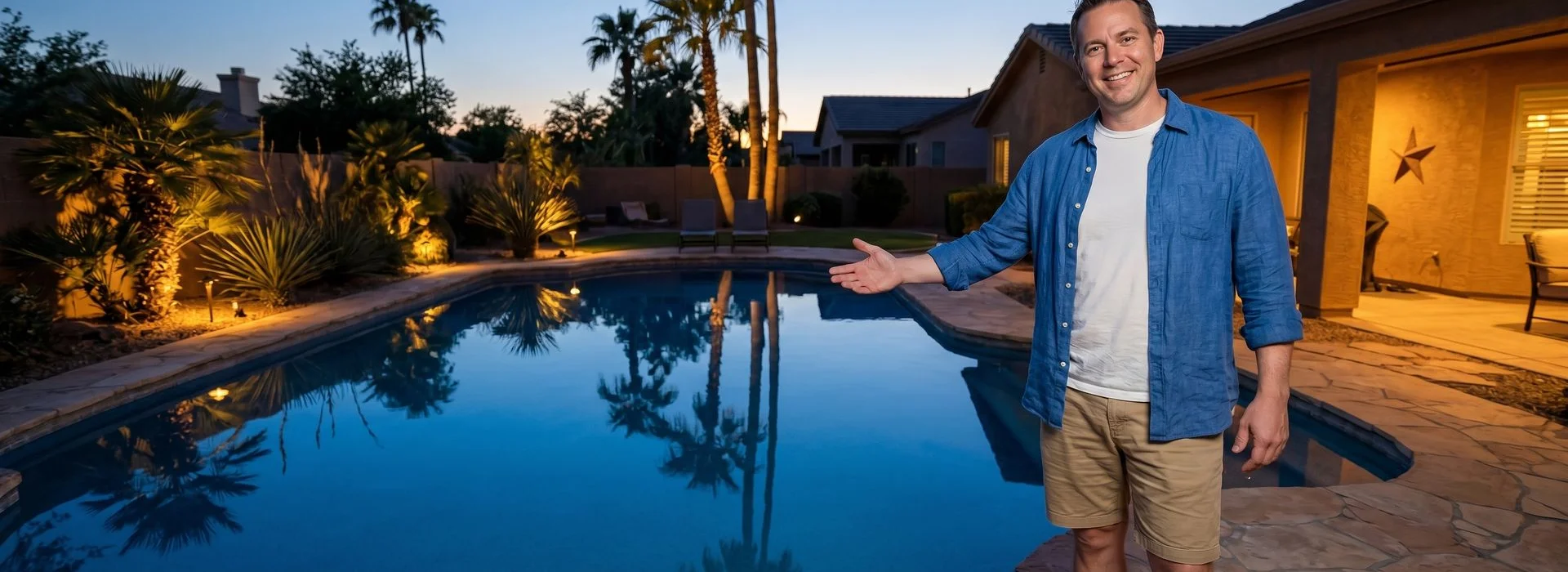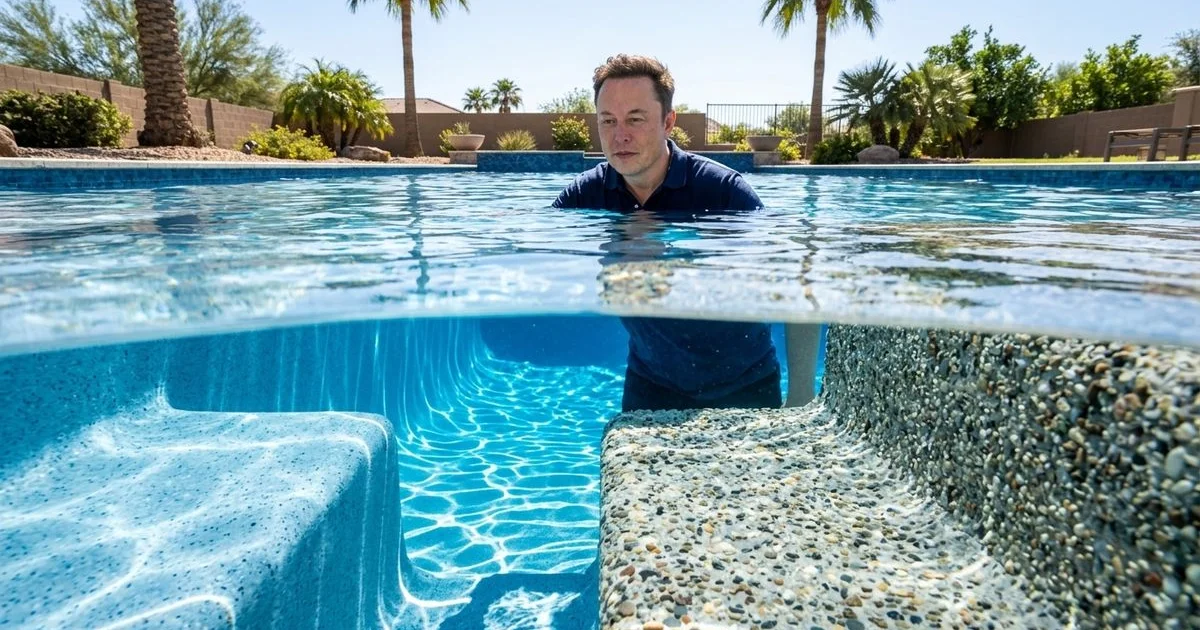
As a team handling pool resurfacing at David Resurface, we see the exact same pattern in older local pools. Phoenix heat and intense UV rays bake the life right out of traditional plaster in about eight to twelve years. You notice the surface turning rough, and those stubborn stains stop responding to acid washes.
Replacing that tired material usually comes down to diamond brite vs pebble tec.
Both of these finishes use durable aggregates to fight off hard water scaling much better than standard plaster. We want to walk you through the key differences in foot feel, total lifespan, and price so you can make the right call for your backyard.
The Direct Comparison
Both finishes beat plaster on durability and stain resistance. The choice between them comes down to foot feel, total lifespan, and price. This pool finish comparison breaks down the exact differences.
Diamond Brite uses fine quartz sand, while Pebble Tec relies on larger natural river pebbles. Our crews typically install Diamond Brite for homeowners seeking a smoother texture at a lower upfront cost.
Pebble Tec appeals to those willing to invest more for maximum longevity and a premium, natural stone aesthetic. Phoenix water averages 200 to 400 parts per million of calcium right out of the tap, which severely tests any pool surface.
| Factor | Diamond Brite | Pebble Tec |
|---|---|---|
| Aggregate | Colored quartz | Natural pebble |
| Foot feel | Smoother (fine-sand texture) | Textured (pebbled) |
| Phoenix lifespan | 10-15 years | 15-20+ years |
| Upfront cost (500 sq ft) | $5,200-$9,800 | $6,000-$11,500 |
| Color rendering | Unified speckle | Distinct stones |
You can check out our Phoenix Pebble Tec service or Phoenix Diamond Brite service for full service details.
Foot Feel
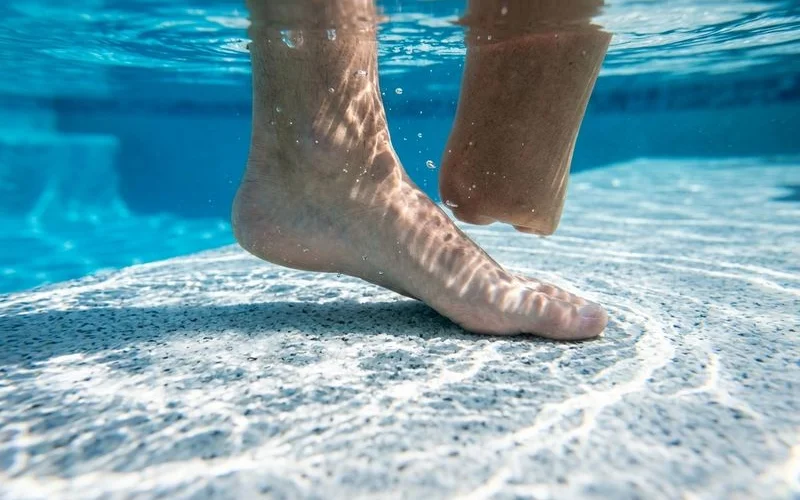
Diamond Brite feels like smooth quartz sand, while Pebble Tec feels like textured river stones underfoot. When evaluating a quartz vs pebble pool finish, texture is usually the deciding factor.
Diamond Brite reads as a smooth, even surface. You can feel the texture of the fine quartz sand, but it does not register as walking on stones.
It is the aggregate finish that comes closest to traditional plaster. Parents with young children often prefer this quartz option because kids playing on the shallow steps for hours will not complain about scraped toes.
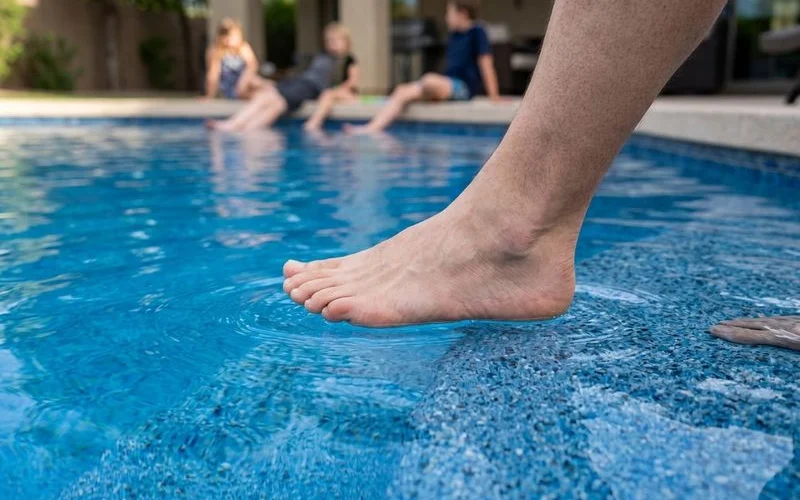
Pebble Tec is distinctly textured. You can feel the individual lentil-sized pebbles underfoot.
Some families love this natural riverbed sensation, while others find it too aggressive. We often guide clients into choosing smaller aggregate blends if foot sensitivity is a major concern.
Durability Under Phoenix UV and Hard Water
Both finishes easily outlast standard plaster, but Pebble Tec provides slightly better long-term durability under the brutal Arizona sun. The true test for any pool surface in Maricopa County is how it handles the combination of 166 days above 90 degrees and heavily mineralized water.
Aggregate durability mechanics
Both finishes get their durability from aggregate dispersed through the cement matrix. Pebble Tec’s larger stones give the matrix more structure. When the cement erodes slightly over years, the stone faces are still there. Diamond Brite’s smaller quartz crystals expose sooner as the matrix erodes.
Our local water often spikes to 600 or 800 parts per million of calcium hardness after a few years of evaporation. This heavy mineral load etches standard plaster rapidly.
The exposed stones in Pebble Tec resist this chemical breakdown, giving it a solid 15 to 20-year lifespan. Diamond Brite holds up admirably for 10 to 15 years, offering excellent protection against scaling compared to basic white cement.
Color Rendering
Both manufacturers offer extensive palettes, but Diamond Brite produces a uniform speckled look while Pebble Tec highlights distinct natural stones. Your choice of material completely dictates the final watercolor of your pool.
- Diamond Brite: This finish offers over 12 standard colors, rendered as a subtle speckle on a background tint. Popular choices like Tahoe Blue and Cool Blue create a bright, inviting classic swimming pool look.
- Pebble Tec: This option features a wider color palette, including premium custom blends. Colors like Blue Surf and Tropical Breeze give the water an incredibly rich, deep appearance from afar.
We highly recommend viewing physical samples in the sunlight before deciding. The ambient light in your specific backyard changes how these finishes reflect through the water.
You can also customize these finishes further. Many clients in Maricopa County add crushed abalone shells or shimmering glass beads to their pebble mix to create a sparkling effect in the shallow end.
Cost Per Year of Ownership
Pebble Tec provides a slightly better value per year of service, even though Diamond Brite costs less upfront. You must factor in how long the surface will last before needing another full replacement.
Reviewing the math for a typical 500-square-foot Phoenix pool reveals the true cost:
- Diamond Brite: Averaging $7,500 over a 12-year lifespan costs about $625 per year.
- Pebble Tec: Averaging $8,500 over a 17-year lifespan breaks down to exactly $500 per year.
We advise clients to align their budget with their long-term property goals. If you plan to sell your home in five years, the lower upfront cost of quartz makes more financial sense.
Recommendation Matrix
Diamond Brite is the best pick for budget-conscious families prioritizing smoothness, while Pebble Tec wins for long-term value. Use this quick guide to match the material to your specific lifestyle.
| Situation | Better pick |
|---|---|
| Kid-heavy family pool with smoothness as a priority | Diamond Brite |
| 15+ year home hold focused on maximum long-term value | Pebble Tec |
| Specific HOA color approval constraints | Diamond Brite (subtler) |
| Pre-sale budget or short-term property hold | Diamond Brite |
| High-end pool paired with artistic glass waterline tile | Pebble Tec Pebble Sheen |
If you want more granular variant detail within the Pebble family, see the Pebble Tec vs Pebble Sheen vs Mini-Pebble guide.