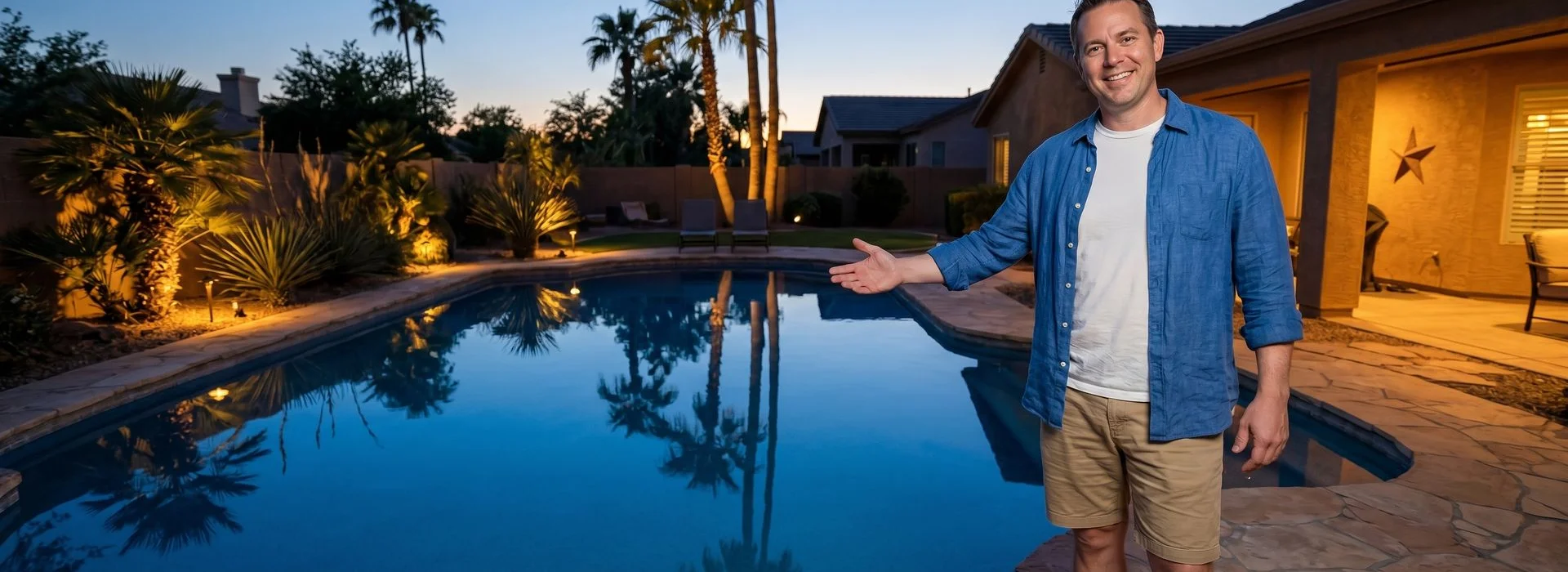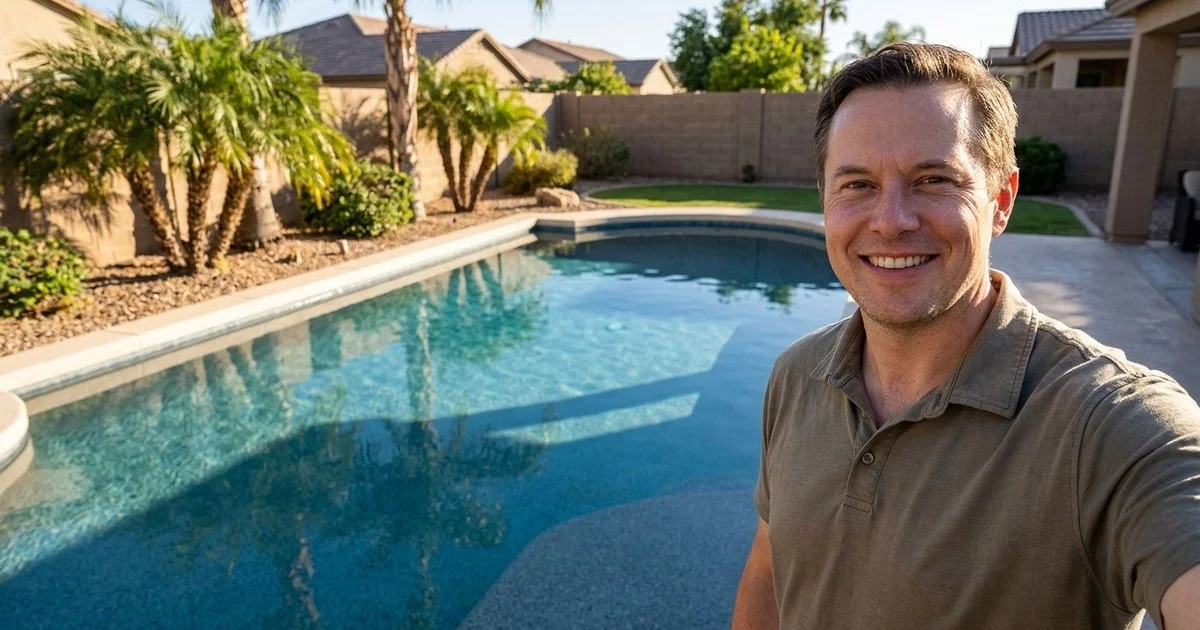
We talk to homeowners every week who ask us how long does Diamond Brite last before needing a replacement.
Plaster fatigue is a harsh reality of maintaining a backyard oasis in the intense desert heat. This guide breaks down the true durability of these finishes locally.
Our team will share the exact maintenance habits that protect your investment.
Knowing the signs of failure saves you money in the long run. For project scope and pricing, see our full Diamond Brite pool resurfacing service page.
The Honest Phoenix Range
We see a lot of manufacturer brochures claiming a 10 to 15 year lifespan for these surfaces. In real Phoenix conditions, 8 to 15 years is the true Diamond Brite lifespan Phoenix homeowners can expect.
The lower end applies to pools fighting hard water scaling and inconsistent chemical balance. Premium factory blends of Diamond Quartz and polymer-modified Portland cement require strict care to reach that 15 year mark.
Industry Insight: High-quality aggregate finishes are heavily reliant on proper curing and chemical startups during their first 30 days.
Our crews find that owners who keep their Langelier Saturation Index tightly controlled are the ones getting maximum longevity. Standard white plaster only survives 7 to 12 years in this climate.
You can review our Diamond Brite vs Pebble Tec lifespan comparison if you are weighing both options. Pebble Tec generally pushes past the 15 year boundary.
What Shortens Lifespan
Our diagnostic visits reveal three primary factors that destroy pool surfaces prematurely. Extreme local weather and water conditions work together to break down the quartz and cement matrix.
- Unbalanced water chemistry: Low calcium levels force the water to leach cement directly from the aggregate matrix. High pH conditions cause calcium scale to drop onto the surface. Aggressive chlorine swings will etch the cement severely.
- Hard-water calcium scaling: Phoenix municipal water is incredibly mineral-heavy, averaging 12 to 22 grains per gallon. Summer evaporation concentrates these minerals even further. Our technicians constantly see scale bonding chemically to the matrix over time, which hides the true surface condition. The underlying finish is usually compromised by the time this scale is thick enough to require an acid wash.
- UV and heat cycling: The Arizona thermal range is punishing on underwater surfaces. Winter nights drop to 40 degrees Fahrenheit, while July sun pushes the average UV index to a staggering 12.5. This intense thermal cycling forces the finish to expand and contract daily. Micro-cracks eventually open in the matrix as the years pass.
What Extends It
Our maintenance records show that proactive brushing and strict chemical management will maximize your pool surface lifespan. Keeping your water perfectly balanced is the single most effective way to prevent premature wear.
We always recommend using a nylon brush rather than a wire brush to avoid scratching the quartz aggregate. Monthly additions of a chelating agent will also help suspend those heavy Phoenix minerals before they stick to the walls.
Three habits that add 2-4 years
Keep LSI between 0.0 and +0.3. Brush the pool weekly in the first year, bi-weekly after. Schedule a professional acid-wash at year 5-7 to dissolve accumulated scale. These three habits consistently push Diamond Brite pools to the high end of the lifespan range.
This simple maintenance schedule makes a massive difference in Diamond Brite durability.
| Maintenance Habit | Frequency | Primary Benefit |
|---|---|---|
| Nylon Brushing | Weekly for first 12 months | Prevents early calcium nodules |
| LSI Chemical Balancing | Tested weekly | Stops cement degradation |
| Professional Acid Wash | Every 5 to 7 Years | Removes destructive mineral buildup |
End-of-Life Signals
We tell homeowners to look for visible pitting and rough textures as the primary indicators of finish failure. These physical changes mean the protective cement layer has worn away.
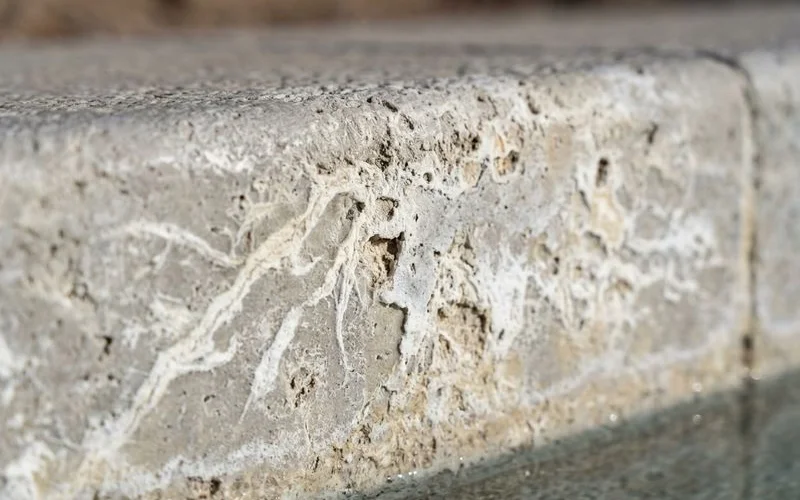
The desert climate accelerates several specific types of wear. Our technicians check for these exact warning signs during every residential inspection.
- Etching: You will notice visible pits in the cement matrix between the quartz crystals.
- Color bleed or fade: Vibrant blues will begin turning grey. This happens especially fast in zones exposed to the harsh summer sun.
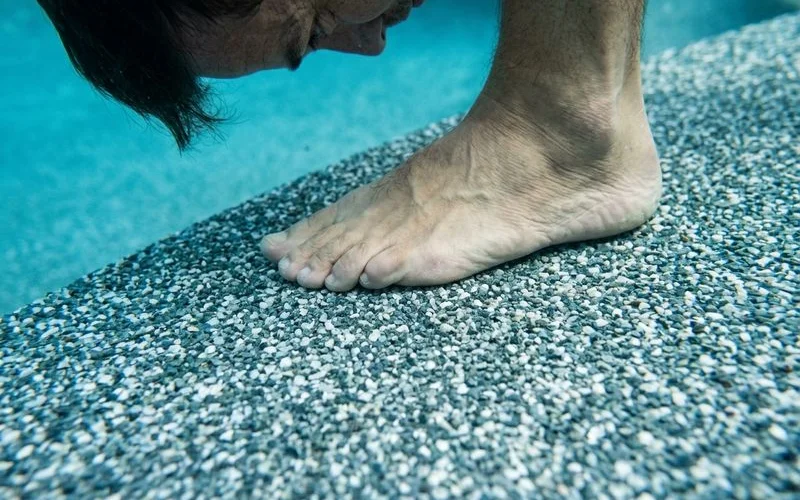
- Rough patches: Bare spots that snag fingernails often lead to scraped feet and toes.
- Chlorine that will not hold: A failing finish harbors bacteria in its micro-texture. This hidden bacteria drives up your chemical demand significantly.
- Hollow spots: Delamination occurs when the plaster separates from the concrete shell. You can hear a hollow, drum-like sound if you tap the area lightly.
Any one of these conditions alone is a clear signal to start planning your next steps. You should schedule a resurfacing project if you spot two or more of these indicators.
When an Acid-Wash Extends Vs When a Resurface Is Needed
Our rule of thumb is that a surface should never be acid-washed if the quartz aggregate is already fully exposed or falling out. A careful acid wash strips away a microscopic layer of cement to reveal fresh material underneath.
A professional treatment at year 5 to 7 removes accumulated scale to restore some of the original color depth. This process only works when the underlying finish is still structurally sound.
It does not work when etching, pitting, or rough patches have already developed. An acid wash will actually accelerate the failure at that stage rather than fixing the problem.
We strongly advise against frequent acid washing because it permanently removes a portion of your finish. A pool should rarely receive more than two or three acid washes during its entire lifetime.
Pro-Tip: Never drain and acid wash a plaster pool during the peak Phoenix summer heat. Industry standards warn that an empty shell can quickly dry out and crack under the 100-degree sun, turning a simple cleaning into a mandatory resurface.
Our Phoenix Diamond Brite resurfacing service walks through this exact decision framework during our on-site estimates. Taking the right approach saves you from spending money on a wash that will just ruin a fragile surface.
We know that planning a pool renovation requires careful timing and budgeting.
Understanding exactly how long does Diamond Brite last in your specific backyard helps you make the most cost-effective choice. Proper maintenance ensures you maximize that investment.
Our experts are ready to schedule your comprehensive surface evaluation today.