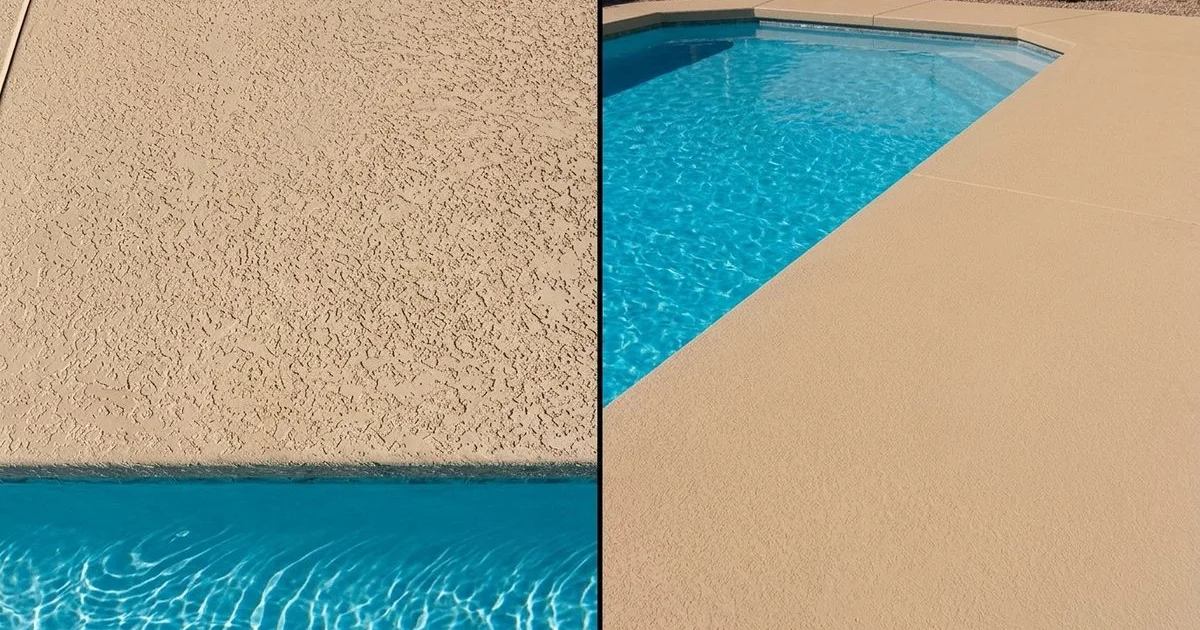
We see the acrylic lace vs cool deck debate every single week from Phoenix homeowners with aging pools. The blazing summer heat makes choosing the right resurfacing option a critical decision for your family’s comfort.
Upgrading a 15-year-old pool area involves balancing cost and safety, making a textured pool deck comparison essential. Our team at David Resurface relies on years of local experience to guide these decisions and deliver reliable results.
Let’s look at the data for a comprehensive acrylic lace comparison to help you choose the right material for your backyard.
The Quick Answer
Our straightforward advice is to choose Acrylic Lace for budget-friendly slip resistance, or select Cool Deck for maximum heat reflection. Both options effectively transform aging pool areas.
Pick Acrylic Lace when: budget is tight, slip resistance is the top priority, the deck has concrete imperfections that need hiding, or heat isn’t the primary concern (shaded decks).
We strongly recommend reviewing the specific benefits of each material before making a choice.
Pick Cool Deck when: heat performance matters most, you want a smoother aesthetic, or the deck gets full Phoenix sun exposure.
We use the table below to help clients compare key metrics at a glance.
| Factor | Acrylic Lace | Cool Deck |
|---|---|---|
| Heat reflection | Moderate (color-dependent) | Best |
| Texture | Most textured (pattern) | Moderate |
| Slip resistance | Highest | Good |
| Lifespan (Phoenix) | 4-8 years | 5-10 years |
| Upfront cost (500 sq ft) | $2,500-$5,500 | $3,000-$6,000 |
| Hides concrete flaws | Best (texture hides) | Okay |
The Heat Comparison
Our crews know that surface temperatures dictate how much you actually use your pool in July. Cool Deck’s acrylic-cement formula uses engineered UV-reflective compounds in the color sealer. A sand-colored Cool Deck at full cure runs 15 to 25 degrees cooler than bare concrete in Phoenix summer heat.
We apply these high-albedo formulas specifically to fight intense solar radiation. Here is how color choices impact temperatures:
- Bare concrete absorbs intense heat and easily reaches 140 degrees Fahrenheit.
- Light Acrylic Lace drops those temperatures by roughly 10 to 15 degrees.
- Cool Deck surfaces maximize reflection for up to a 25-degree reduction.
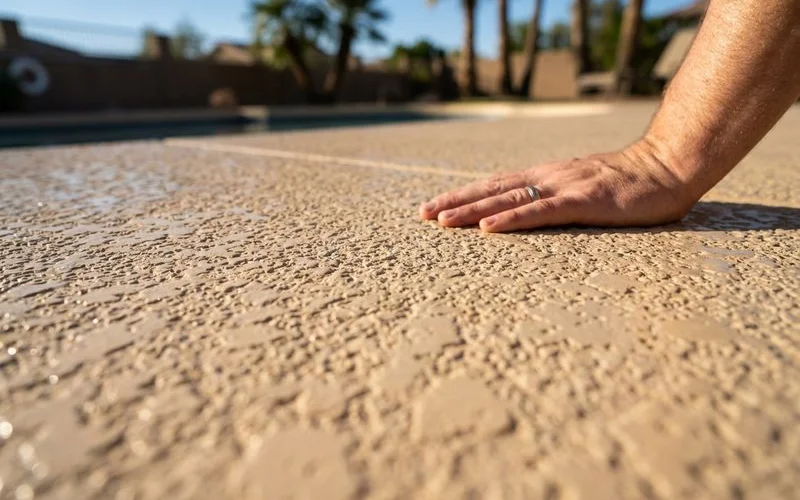
Acrylic Lace’s color sealer is more conventional. With a light tint like Sonoran Sand, it runs roughly 10 to 15 degrees cooler than bare concrete.
We consider this temperature drop a meaningful improvement for morning and evening swimming. It simply does not match Cool Deck’s peak performance during the hottest parts of the day.
On west- or south-facing pool decks
Heat performance matters most for full-sun decks. Cool Deck’s 5 to 10 degree advantage over Acrylic Lace is the difference between a deck you can walk on barefoot at 2 p.m. and one that still sends you for sandals. For west-facing decks, pay the Cool Deck premium.
The Texture Comparison
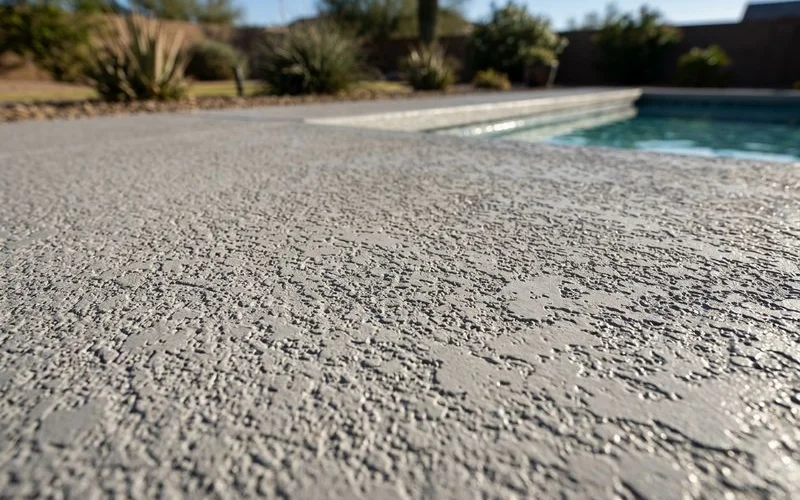
Our installers create Acrylic Lace’s defining feature, the lace pattern roller texture, using specific industry tools. The material is typically sprayed on with a drywall hopper gun and then knocked down with a pool trowel. This creates a fine, repeating pattern across the deck.
We prefer this heavy texture because it hides minor concrete crazing better than Cool Deck’s smoother surface. It also gives stronger wet-grip slip resistance for running feet. The texture difference plays a major role in the final look and safety of your yard.
Application Considerations
We always evaluate the existing concrete before recommending a specific finish. Cool Deck’s texture is moderate, meaning it is present but not as pronounced. This smoother finish works perfectly on newer concrete with minimal surface imperfections.
Our team consistently sees older concrete benefit more from Acrylic Lace’s strong hiding power. The extra texture masks underlying flaws effortlessly without needing a full concrete tear-out. Proper application ensures the new surface lasts for years.
When Each Wins
We base our final recommendations on your specific yard layout, neighborhood standards, and budget. Here is exactly how to decide between the two finishes. The choice depends entirely on your daily pool habits.
We highly suggest reviewing these specific scenarios to find your best fit.
Acrylic Lace wins for:
- Shaded decks or covered patios where extreme heat is less of a factor.
- Older concrete with visible imperfections that require heavy texture.
- Tight budgets where Cool Deck’s premium is not justifiable.
- Kid-heavy pool decks where wet-slip resistance is the absolute top concern.
Cool Deck wins for:
- Full-sun pool decks facing south or west.
- Buyers who prioritize a smoother aesthetic.
- Decks in Scottsdale or Chandler neighborhoods where Cool Deck is the local standard.
- Situations where heat performance is the primary decision factor.
We can easily refresh an older acrylic surface in a single day using just a 5-gallon bucket of topcoat. Regular maintenance keeps either deck safe and visually appealing for years.
We know the acrylic lace vs cool deck decision comes down to your specific budget and sun exposure. See our Acrylic Lace service or Cool Deck service for pricing and process details on each.
Our team is ready to answer any remaining questions. Reach out today to schedule a thorough evaluation of your backyard.